Google Reviews for Doctors: What Practices Can Do in 2026
Medical practices may ask for Google reviews – without pressure, incentives or pre-selection. Rules on confidentiality, the German HWG and removal.
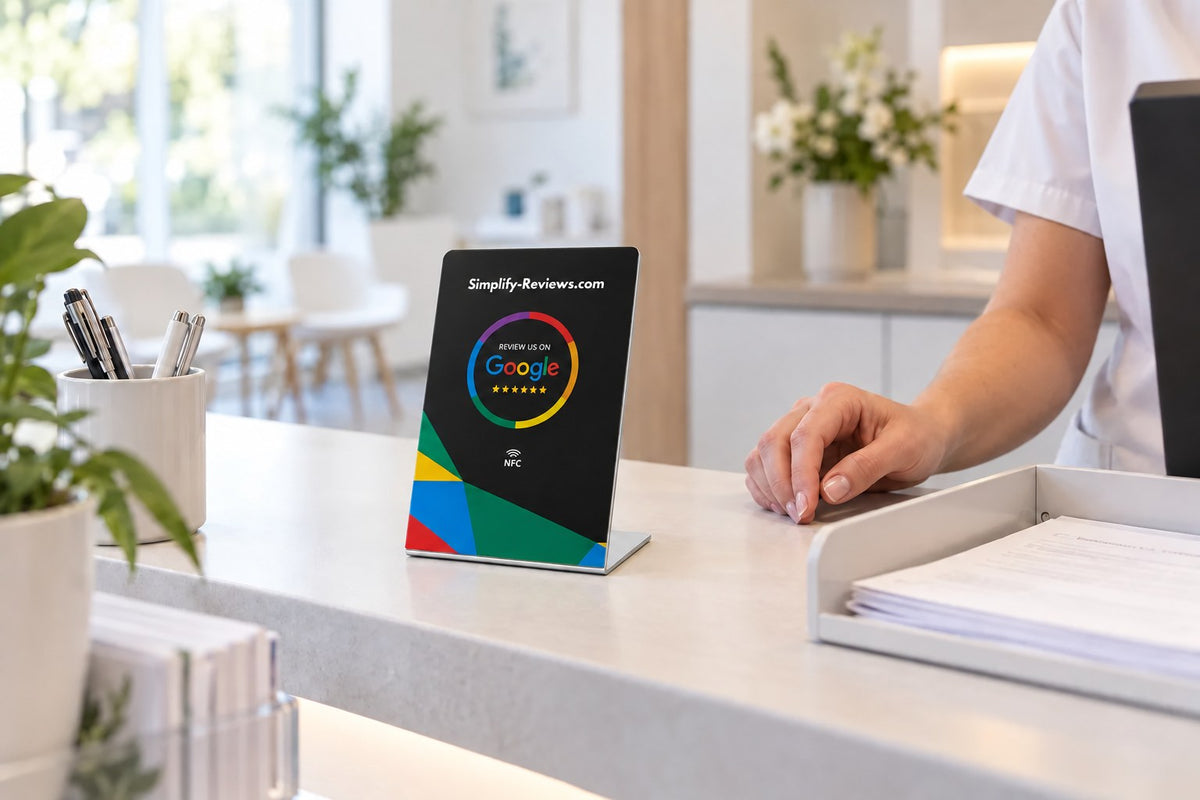
Short answer: medical practices may generally ask patients for a Google review, provided the request is neutral, voluntary and made without anything in return. What is not allowed: bought reviews, rewards, pressure at reception and review gating, i.e. pre-selecting only satisfied patients. And whenever you reply to a doctor review on Google, an additional rule applies: the practice must not publicly confirm that the person was a patient.
- Google only allows review requests for genuine experiences and without influencing the star rating or content; incentives such as discounts or free services are expressly prohibited.
- A link or QR code for leaving a review may be shared; Google mentions receipts, thank-you emails and printed QR codes, among other possible places to use them.
- Doctors must maintain confidentiality regarding patient data entrusted to them or which has become known to them under § 9 MBO-Ä; under § 203 StGB, unauthorised disclosure can be a criminal offence (MBO-Ä, § 203 StGB).
- Google reviews are public; according to Google Maps Help, anonymous reviews are not possible.
- Inadmissible reviews can be reported, but Google does not remove every negative review – only content that violates its policies.
Last updated: November 2026. Scope: medical practices, dental practices and medical facilities in Germany; not legal advice. Please check individual cases with your medical association, data protection officer or specialist lawyer.
Can a medical practice actively ask for Google reviews?
Yes, a medical practice may actively ask for Google reviews, as long as the request is neutral, voluntary and equally accessible to all patients. The key question is not whether you ask, but how you ask.
For example, a factual note at reception is allowed:
“Your opinion matters to us. If you would like to, you can review our practice here on Google.”
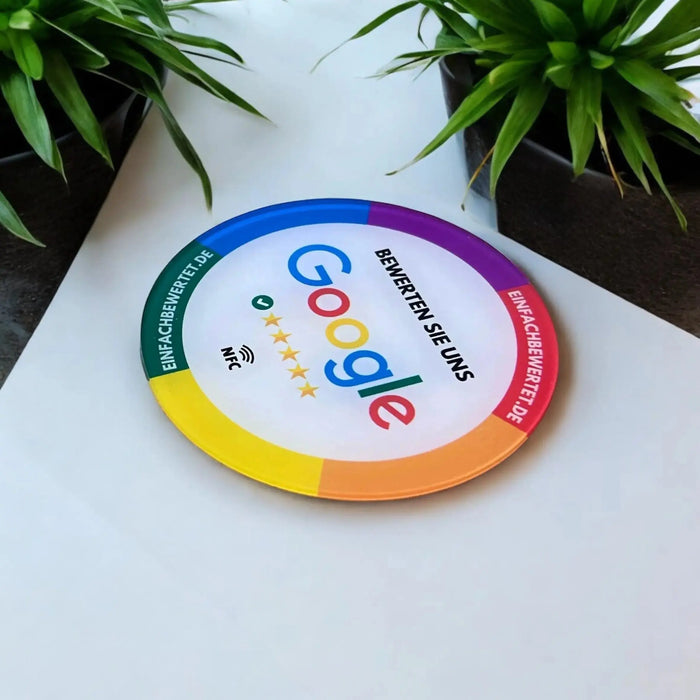
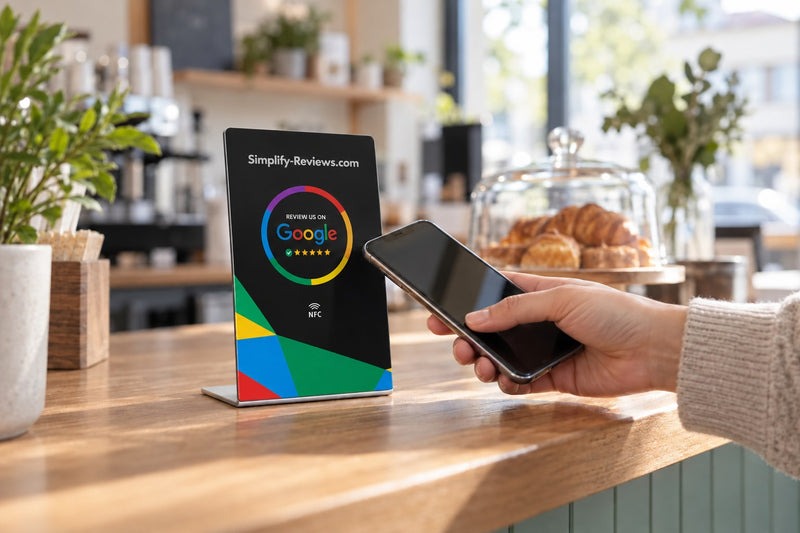
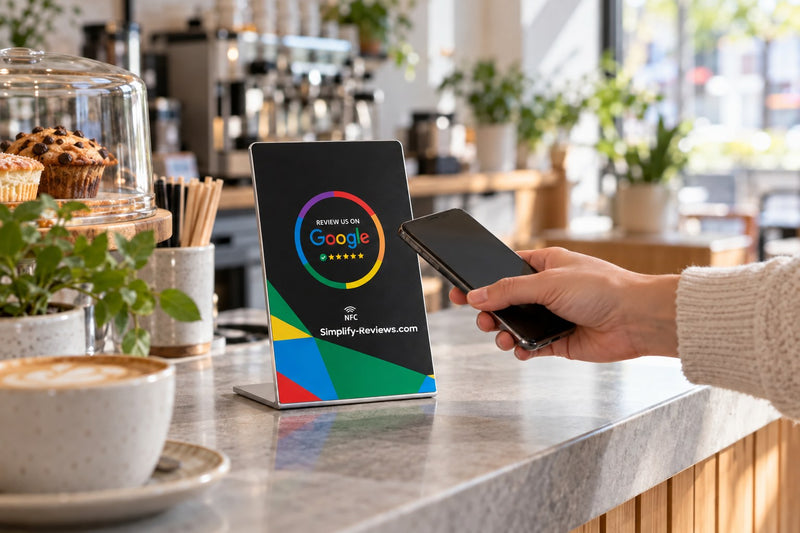
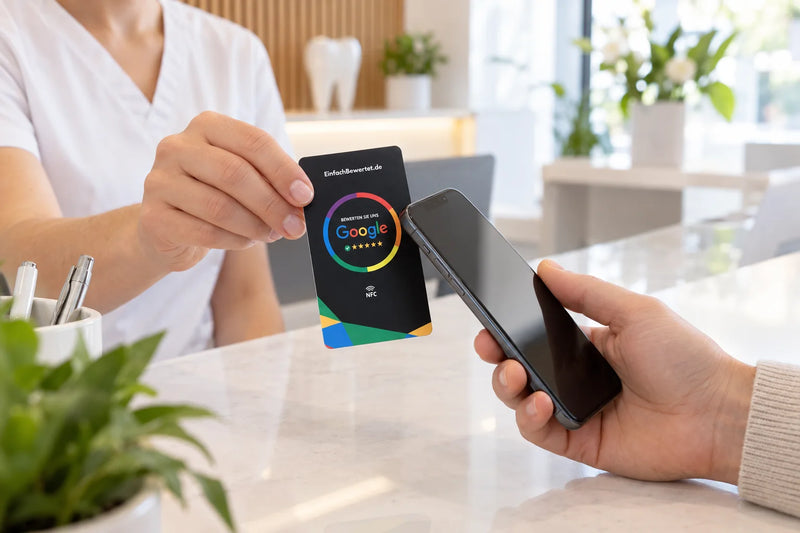
A review link on a card, a QR code on a notice or an NFC display in the waiting area are also possible. Google itself explains that businesses can share a link or QR code so customers can write reviews for the Business Profile. However, the review must be based on a real experience and given without an incentive.
For medical practices, there are three additional limits:
- Confidentiality: You must not publicly confirm that someone was a patient.
- Professional rules: Advertising must remain factual; promotional, misleading or comparative advertising is contrary to professional rules under § 27 MBO-Ä.
- Data protection: If you contact patients by email or SMS after an appointment, you are using personal contact data from the treatment relationship. This should be properly checked and documented in advance.
For practices, the safest starting point is therefore usually a neutral notice on site: visible, voluntary, without using patient data and without direct monitoring by the team.
What is prohibited in connection with a doctor review on Google?
The main things prohibited are incentives, pressure, fake reviews and any form of pre-selection based on satisfaction. Google expressly prohibits reviews that are paid for, rewarded, biased or manipulated; businesses also must not prevent negative reviews or specifically request only positive reviews.
| Approach | Assessment for medical practices |
|---|---|
| “If you would like to, we would be grateful for an honest review.” | Generally permitted if there is no pressure and nothing in return. |
| NFC display or QR code at reception | Practical and low-risk if all patients see the same neutral access route. |
| “Please rate us with 5 stars.” | Not recommended, because it influences the stars and content. |
| “Only if you were satisfied, please review us.” | Review gating; not allowed under Google’s policies. |
| Discount, voucher, gift or prize draw for a review | Prohibited because it creates an incentive. |
| Giving staff review targets | Risky; Google lists review targets as not permitted. |
| Buying reviews or having employees/family write them | Prohibited and risky under competition law. |
Review gating is particularly sensitive. It means a process where patients are first asked internally whether they are satisfied, and only positive feedback is forwarded to a public review page. Google prohibits preventing negative reviews or specifically asking customers for positive reviews. You can find more in our article Review gating is prohibited in Germany.
For your practice, this means: ask everyone in the same way, but force no one. No “just review us quickly here at reception”, no looking at the smartphone, no following up to check whether the review was submitted.
How can practices ask for reviews compliantly in everyday work?
The best approach is a fixed, neutral process that works without pressure and without personal follow-up. The team does not have to “sell” anything – it only needs to give a voluntary note.

A simple practice routine looks like this:
- Check your Google Business Profile: Name, address, phone number, opening hours, specialty and location must be correct. Otherwise, reviews may end up on the wrong profile.
- Create a review link: Use the official review link from your Business Profile. You can find step-by-step instructions here: Create a Google review link.
- Define a neutral sentence: For example: “If you would like to, you are welcome to leave us an honest review later.”
- Choose a fixed place: Reception, waiting room, exit or billing area are better than a direct request during a medical situation.
- Combine NFC and QR code: NFC is convenient for modern smartphones; the QR code remains the fallback for older devices or disabled NFC.
- Brief the team: No rewards, no star-rating requirements, no selection based on satisfaction.
- Define the reply process: Who replies? In what tone? Which content is taboo because of confidentiality?
For medical practices, it is especially important that the note is not given at a moment of dependency. Do not ask during an examination, before an important decision or in a way that could make patients feel obliged. A visible display after the appointment is usually less intrusive than a personal request.
If you need wording templates, our article Asking patients for a review after an appointment is a useful addition.
What applies to SMS, email and review links after an appointment?
Review links by email or SMS can work, but in medical practices they should only be used after proper checks under data protection and professional rules. The difference compared with an on-site display: you are actively using contact details from the treatment relationship.
Google generally allows links or QR codes to be shared; Business Profile Help mentions thank-you emails, among other possible channels. But that does not replace checks under the GDPR, the German Unfair Competition Act (UWG), professional rules and internal practice processes.
In the healthcare sector in particular, these guardrails are recommended:
- Check consent: If you ask for a review by SMS or email, it should be clearly documented in advance that this communication channel is permitted. The North Rhine Medical Association notes, in relation to SMS contact after treatment, that such a process at least requires the patient’s consent.
- Do not mention health data: The subject line and text should not contain any diagnosis, treatment or specialist details.
- No pre-selection: Do not send the link only to patients who seem particularly satisfied.
- Respect opt-outs: If someone does not want messages, no further review prompt may follow.
- Check service providers: If you use external software, you need a proper data processing agreement and clear data flows.
A neutral text could be:
“Thank you for visiting our practice. If you would like to, you can voluntarily leave an honest review here: [Link].”
Avoid wording such as “We’d be delighted to receive 5 stars” or “If everything was fine, please leave us a positive review”. This influences the content and again moves towards review gating.
How can doctors reply to reviews without breaching confidentiality?
Always reply to Google reviews in a way that does not confirm treatment contact and does not mention any medical details. Medical confidentiality still applies even if the patient themselves publicly writes about complaints, diagnoses or appointments.
Under § 9 MBO-Ä, doctors must maintain confidentiality about what has been entrusted to them or become known to them in their capacity as a doctor. § 203 StGB makes the unauthorised disclosure of third-party secrets by doctors, dentists, pharmacists and other healthcare professionals a criminal offence.
Do not write:
- “You came to us on 12 March because of …”
- “We explained the treatment to you in detail.”
- “Your diagnosis was …”
- “You missed the appointment yourself.”
- “You are not even a patient of ours.”
Better:
“Thank you for your feedback. For reasons of confidentiality, we cannot comment publicly on individual cases. Please contact our practice management directly so we can discuss your concern in person.”
Restraint is also advisable with positive reviews. Instead of “We’re glad your treatment was successful”, a simple “Thank you for your kind feedback. We appreciate you taking the time.” is enough.
You can find more neutral wording in our reply templates for reviews.
How can you get a bad Google review removed?
You can only get a bad Google review removed if it violates policies or rights; practices generally have to accept a factual negative opinion. Google itself states that although any review can be reported, only reviews that violate policies are removed. Google also does not mediate straightforward conflicts between businesses and customers.

Typical cases for reporting or legal review:
- The person demonstrably was never a patient.
- The review contains insults or abusive criticism.
- False statements of fact are made.
- Sensitive data about other people is published.
- The review comes from competitors, former employees or obviously fake profiles.
- There is extortion, such as “money in exchange for deletion”.
Practical process:
- Save a screenshot: Document the review, profile name, date, stars, text and URL.
- Check internally: Was there treatment contact? Do not use patient data publicly.
- Reply calmly: Neutral, brief and without breaching confidentiality.
- Report to Google: Open the review in your Business Profile and select “Report”.
- Consider one appeal: If Google does not remove it, a further review may be useful depending on the case.
- Seek legal review: In cases of serious false statements of fact, insults or reputational damage, involve a specialist lawyer.
Can you report someone to the authorities over a Google review? Yes, if the content is criminally relevant, for example in the case of insult (§ 185 StGB), defamation (§ 186 StGB) or slander (§ 187 StGB). But a merely harsh opinion such as “I was dissatisfied” is not automatically a criminal offence.
For a structured initial assessment, our PDF guide to removing unjustified Google reviews may also help.
What role do the German Therapeutic Products Advertising Act and professional code play?
The German Therapeutic Products Advertising Act and the professional code do not restrict neutral requests for reviews, but they do restrict how practices use reviews in advertising. The distinction matters: a review on the Google profile is different from deliberately selected patient praise in an advert.
Under § 27 MBO-Ä, factual professional information is permitted; in particular, promotional, misleading or comparative advertising is contrary to professional rules. The German Medical Association also points out that the model professional code only becomes legally binding through the relevant state medical association.
The German Therapeutic Products Advertising Act (Heilmittelwerbegesetz, HWG) regulates advertising for medicinal products, procedures, treatments and other remedies outside professional circles. § 11 HWG prohibits advertising with statements by third parties, such as letters of thanks, recognition or recommendation, if this is abusive, offensive or misleading.
In everyday practice, this means:
- A neutral note such as “Please feel free to review us honestly” is different from “Our patients love us”.
- Individual patient reviews on websites, flyers or adverts should be legally checked before publication.
- Before-and-after references, promises of healing and exaggerated claims are particularly risky.
- Reviews must not be selected in a way that creates a false overall impression.
If you make reviews accessible on your website, § 5b para. 3 of the German Unfair Competition Act (UWG) may also become relevant: anyone who makes consumer reviews accessible must state whether and how it is ensured that the reviews come from actual users.
Where do patients see doctor reviews, and can they review anonymously?
Patients see Google reviews directly in Google Search and on Google Maps; according to Google Maps Help, anonymous Google reviews are not possible. Depending on the profile, visible information may include the Google profile name, other public contributions and published reviews.
Where can you find doctor reviews? In practice, many patients search via:
- Google Search, for example “GP near me”
- Google Maps
- the practice’s Google Business Profile
- specialised doctor review portals
- recommendations from health insurers, acquaintances or local groups
Where can you see Google reviews? The Business Profile shows the average star rating, the number of reviews and a list of individual reviews. In Google Maps, users can click on the review count and read the posts. For practices, it is therefore not only the star rating that matters, but also recency, tone and response behaviour.
Important: patients can adjust their displayed profile name, but the review is not published anonymously in the sense of “without a public profile”. Practices should not hide this if patients ask at reception.
Which marketing measures are important for a medical practice?
For medical practices, the most important marketing measures are a complete Google Business Profile, clear local visibility, factual website content and a compliant review process. Reviews are not an isolated trick, but a trust signal within the overall picture.
Prioritise in this order:
- Optimise your Google Business Profile: Keep categories, services, opening hours, photos, accessibility, parking options and contact methods up to date.
- Cover local search terms: For example “GP Berlin Prenzlauer Berg”, “emergency dentist Cologne” or “physiotherapy Munich Schwabing”.
- Collect reviews continuously: A few genuine reviews every week are better than unnatural spikes.
- Reply professionally: Friendly, brief and compliant with confidentiality.
- Keep your website up to date: Clearly present services, team, directions, appointment options and frequently asked questions.
- Use an offline process: Reception, waiting room and exit are often more effective than complicated software flows.
- Check unjustified reviews: Do not fight every criticism, but document and report clear violations.
Especially for dentists, physiotherapy practices, pharmacies and opticians, many rules are similar, but professional codes differ. So always check your own profession and chamber. On the technical side, a neutral on-site review access point can help because it does not actively process patient data and offers all visitors the same route to leave a review.
Our view
In our view, many review processes in practices fail not because of the technology, but because there is too much pressure in the workflow. If the team actively pushes patients towards a “good” review, it quickly creates an uncomfortable moment – and that is especially sensitive for a medical practice. A calm, visible and consistent note is better: anyone who wants to can leave a review; anyone who does not want to simply does not.
It is also important to keep expectations realistic. No display, QR code or review link guarantees a certain number of new reviews, a better star rating or a better ranking. What does work well in practice is reducing friction: patients do not have to search for the right link, do not land on the wrong location and can decide later at their own pace.
With medical practices, we would always clarify the legal framework first: no incentives, no review gating, no personal follow-up without prior review, no replies containing treatment details. After that, it is about routine. A review display at reception, a take-away card and a short team sentence are often enough, provided everyone knows what is allowed and what is not.
— Simplify Reviews Team
How we help
We help practices implement the review journey in a technically simple and neutral way: with a Google review display with NFC that leads directly to the review form, plus a QR code as fallback. For patients who prefer to review later, NFC review cards are suitable. If you would like to request reviews digitally after an appointment, a review link for your email signature can be useful – but only after an internal data protection review. We also support you with optimising your Google Business Profile and advise you on the right solution for your practice.
Frequently asked questions
May doctors ask patients for a Google review?
Yes, if the request is voluntary, neutral and made without anything in return. You must neither ask for a specific star rating nor select only satisfied patients. Doctors are also subject to confidentiality, professional rules, data protection and the German Therapeutic Products Advertising Act.
May I reward patients for a Google review?
No. Discounts, vouchers, gifts, prize draws or free services in return for a review violate Google’s policies. This also applies if the reward is supposedly intended for “honest” reviews.
Can you leave anonymous Google reviews?
No, according to Google Maps Help, reviews cannot be published anonymously. At least the profile name is visible, and other public contributions from the profile may also be findable. Patients can adjust their display name, but they cannot review completely anonymously.
How can I get a bad Google review removed?
Report the review if it violates policies, for example in the case of fake reviews, insults, conflicts of interest or false statements of fact. Factual negative opinions are normally not deleted. Document the content and seek legal advice in serious cases.
Can you report someone to the authorities over a Google review?
Yes, if the content is criminally relevant, for example in the case of insult, defamation or slander. But a simple bad experience or harsh criticism is not automatically a criminal offence. Before filing a report, practices should secure evidence and obtain legal review without disclosing patient data publicly.
Which is better: an NFC display or a review link by SMS?
For medical practices, an NFC display is often more data-minimising because no contact details are actively used for a review request. SMS or email can work, but they require a proper consent and data protection review. In both cases: no pressure, no reward, no pre-selection.
Sources
- Google: Prohibited and restricted content in Google Maps
- Google Business Profile Help: Create a link or QR code to request reviews
- Google Maps Help: Add, edit or delete reviews and ratings
- Google Business Profile Help: Report inappropriate reviews
- Google Business Profile Help: Restrictions for policy violations
- German Medical Association: Model Professional Code for Doctors, as of May 2026
- Federal Ministry of Justice: § 203 StGB – Breach of private secrets
- Federal Ministry of Justice: § 11 German Therapeutic Products Advertising Act
- Federal Ministry of Justice: § 5b UWG – Consumer reviews