Have a Negative Google Review Removed: How to Do It for Free
How to report a negative Google review for free, when removal is possible, and what steps can help with fake reviews, insults or legal violations.
Short answer: You can have a negative Google review removed for free if it violates Google’s policies or is demonstrably unlawful. You report it directly through your Google Business Profile or via the review management tool; Google usually checks reported reviews within several days. Factually correct criticism will not be removed simply because it harms your business.
- You can report any review, but Google only removes content that violates its policies or is legally problematic; merely unwanted criticism is not enough.
- Typical grounds for removal include fake reviews with no genuine experience, spam, conflicts of interest, personal data, vulgar language, threats or demonstrably false factual claims.
- If Google does not remove the review after your first report, you can submit a one-time appeal in the review tool.
- In Germany, even the objection “no customer contact” can be relevant: the German Federal Court of Justice (BGH) generally considers this to trigger review obligations for the review platform.
- You may ask customers for new reviews, but you must not offer discounts, gifts or any other benefits; according to Google, incentives for reviews are strictly prohibited.
Last updated: November 2026. Scope: local businesses in Germany, especially restaurants and hospitality, medical practices, trades, automotive businesses, retail stores and branch-based businesses with a Google Business Profile.
Can negative Google reviews be removed for free?
Yes, you can report a negative Google review for free and request its removal if it violates policies or infringes your rights. The free route is via your Google Business Profile, Google Maps or the “Manage your business reviews on Google” tool.
The distinction is important: Google does not remove a review simply because it is negative, unfairly worded or damaging to your business. Google explicitly states that factually accurate negative reviews are not automatically removed and that Google does not mediate disputes between businesses and customers.
A free report is most likely to succeed in cases such as:
- fake review with no genuine customer contact
- confusion with another business
- insults, hate speech, vulgar language or threats
- personal data, such as health data, full names of uninvolved people or private contact details
- spam, advertising, links or repeated identical reviews
- conflict of interest, for example a review by a competitor, former employee or closely connected person
- blackmail or extortion, such as “money in exchange for deletion”
- false factual claims that you can substantiate
What is not enough: “The customer is exaggerating,” “that’s unfair,” “we see it differently” or “the review is costing us revenue.” In those cases, you should respond professionally and collect more genuine reviews in parallel instead of trying to force removal.
When can you have a Google review removed — and when not?
A Google review can be removed if you can clearly and plausibly explain a policy violation, a lack of genuine experience or a legal violation. Pure opinions, on the other hand, are generally protected, even if they are unpleasant.
| Case | Removal more likely? | What you should check |
|---|---|---|
| “Never been a customer” | Yes, if plausibly explained | CRM, appointment book, invoice, reservation, order, receipt |
| “Scam shop” without evidence | Often possible | Check whether it is an insult or a false factual claim |
| “The food was cold” | Usually no | Subjective customer experience; better to respond factually |
| 1 star with no text | Possible, but not certain | Check for lack of customer contact or patterns |
| Review by a competitor | Yes, if provable | Document industry, context, profile and previous contact |
| Private patient data in a doctor review | Often possible | Check data protection and personality rights |
| Extortion: “Pay or the 1 star stays” | Yes, special case | Save screenshots, use the special extortion form |
With fake reviews, the key point is “genuine experience.” Google Maps requires contributions to be based on actual experiences at a place or with a business; fake interactions and paid reviews are not permitted.
For Germany, there is an additional point: Google itself notes that reviews of local businesses can be removed if they violate the general right of personality under German law. One explicitly mentioned possible ground for removal is that a business cannot verify the reviewer as a customer or business contact.
Even so, you should work carefully: deleting on suspicion, blanket mass reports or pressure on genuine customers are risky. In cases involving serious allegations, medical data, statements relevant to criminal law or potential consequential damage, a specialist lawyer should assess the individual situation.
How do you report a bad Google review directly to Google?
You report a bad Google review by opening your Business Profile, selecting the review, clicking “Report” and choosing the appropriate reason. Google describes this process as: open the profile, read reviews, select “Report” next to the review, choose a reason and submit the report.

Illustrative image (AI-generated)
Here is how to proceed in practice:
-
Save a screenshot Save the review with the date, star rating, text, profile name and link. If anything is changed later, you will have documented the original version.
-
Check the review internally Search for the name, date, content and possible clues: Was the person a customer? Was there an appointment, order, table, receipt or email thread?
-
Select the reason for removal Do not simply report it as “inappropriate”; assign the specific reason: spam, vulgar language, conflict of interest, off-topic, personal data or fake experience.
-
Prepare a brief explanation Even if the form does not always allow much text, write a precise internal explanation. Example: “The person cannot be found in our appointment and invoicing system; the service described is not offered at this location.”
-
Check the status Google lists possible statuses including “Decision pending,” “No policy violation” and “Escalated”; if your report is rejected, you can submit a one-time appeal.
-
Do not submit multiple uncoordinated reports in parallel Clean documentation is better than frantic clicking from several accounts. If you later appeal, you will need clear evidence.
Extortion follows a different process: do not pay, do not offer anything in return, and immediately save all evidence. Google provides a special reporting form for extortion attempts involving negative reviews and in particular requires screenshots of the communication as well as links to the suspicious reviews.
What evidence increases the chance of getting a review removed?
The best evidence shows that the review is not based on a genuine experience, makes false factual claims or violates specific policies. The more accurate your documentation, the easier it is for Google, a lawyer or later a court to assess the case.
Useful evidence includes:
- screenshot of the review with date
- direct link to the review
- export from appointment book, reservation system, practice software or workshop order
- invoice, receipt, order number or delivery note
- email thread or chat history
- staff rota, if it is claimed that a specific person was working
- proof that the reviewed service is not offered at the location
- screenshots of threats, extortion or demands
- evidence of a review pattern, such as several 1-star reviews within a short period
For local businesses, everyday records matter: a restaurant checks reservations, receipts and visit times. A physiotherapy practice checks its appointment book and patient management system without publicly disclosing health data. A trades business checks quotes, orders, site addresses and sign-off. A car repair shop checks registration plates, orders, invoice numbers and vehicle check-in.
Pay attention to data protection: do not publish customer data in your public response. Use evidence internally for the report, appeal or legal review.
A common mistake is an emotional counterclaim: “None of this is true.” A factual, verifiable structure is better:
- “We cannot identify any customer contact under this name.”
- “We do not offer the service described at this location.”
- “According to the staff rota, the alleged incident could not have taken place.”
- “The review contains private data about a third person.”
- “The reviewer is demanding money by message in exchange for removal.”
If you suspect a fake-review pattern, a systematic check also helps. You will find a practical checklist in the article How to spot fake reviews.
What should you do if Google does not delete the review?
If Google does not delete the review, you should review the case, add evidence and submit a one-time appeal via the review tool. Google expressly provides for this appeal if no policy violation was found after the initial review.

Illustrative image (AI-generated)
Then proceed as follows:
-
Read the reason for rejection Check whether Google found “no policy violation” or whether documents are missing.
-
Sharpen your explanation Do not write more; write more specifically. Name the policy violation and the evidence.
-
Consider the legal route If the issue involves false facts, personality rights, data protection, insults or lack of customer contact, a legal request may make sense. Google also offers a way to report content for legal reasons.
-
Respond publicly and professionally As long as the review is visible, potential customers will see not only the criticism, but also your response. A good response can limit the damage.
-
Do not offer anything in return Do not offer money, a voucher or a free service for changing or removing a review. Google classifies incentives for posting, changing or removing negative reviews as prohibited.
If you are considering legal action, have the chances of success assessed in advance. Not every bad review is unlawful; conversely, clear fake or extortion cases should not be left unaddressed.
How should you respond publicly while the negative review is online?
You should respond calmly, briefly and with a focus on solutions, without publicly disclosing customer data, internal details or accusations. Google recommends that businesses read and reply to reviews; replies are displayed publicly as the business’s response.
A good response achieves three things: it takes genuine criticism seriously, shows professionalism to other readers and avoids legal risks.
Examples:
For genuine criticism: “Thank you for your feedback. We are sorry that your visit did not meet your expectations. Please contact us directly so that we can review the matter internally and find a solution.”
For a review you cannot identify: “Thank you for your feedback. Based on the information provided, we are currently unable to match the situation described to our records. Please contact us with the date and further details so that we can review the case.”
For an insulting or questionable review: “We take criticism seriously, but we cannot understand this account of events. As we believe the review may violate policies, we are reviewing the matter internally and through the designated reporting channels.”
Avoid:
- “You are lying.”
- “We will sue you.”
- “Delete this immediately.”
- patient data, order details or invoice information
- public discussions about discounts, refunds or goodwill gestures
Response templates help with recurring cases. You can find a template in our review response templates.
What does it cost to have a bad Google review removed?
Reporting through Google costs 0 euros; external help from a lawyer, agency or removal service may involve costs. The key question is whether you only use Google’s free process or commission an individual legal review.
Free options include:
- reporting via the Business Profile
- reporting via the review tool
- one-time appeal after rejection
- public response
- internal documentation
- legal request via Google’s form, if you submit it yourself
Costs may arise for:
- legal assessment of the review
- lawyer’s letter to the platform
- court proceedings
- ongoing support for multiple locations
- professional reputation or profile optimisation
Be cautious with promises such as “guaranteed removal” or “every negative review disappears.” There is no guarantee, because factual, genuine criticism may remain permissible. A serious assessment distinguishes between removable policy violations and opinions you may have to accept.
The same applies to the topic “delete Google reviews for free”: first report it yourself, secure evidence and wait for the deadlines. If the case is economically significant or legally sensitive, a specialist should check whether the next step is worthwhile.
How can you prevent new problem cases without breaking the rules?
The best way to prevent new problem cases is through clear processes, quick responses to criticism and a steady flow of genuine reviews from all customer groups. Review gating, rewards or deliberately directing only satisfied customers to leave reviews are not allowed.
Google allows you to ask customers for reviews and provide a link or QR code; free or discounted goods or services in exchange for reviews are expressly prohibited.
A clean process looks like this:
- After completion, politely ask for an honest review.
- Offer all customers the same simple route.
- Do not specify a star rating.
- No reward, no discount, no prize draw.
- Record negative feedback internally, but do not exclude it from the review process.
- Respond to new reviews regularly.
- Document and promptly report suspicious reviews.
Why this is worthwhile: Google cites relevance, distance and prominence as key factors in local search results. Prominence also includes the number of reviews and positive ratings; at the same time, better local ranking cannot be bought or requested.
More genuine reviews do not legally displace a single bad review, but they put it into perspective within the overall picture. The important point is to collect reviews lawfully, not manipulate them. You will find a more detailed overview in the article Review gating is prohibited.
What applies to restaurants, medical practices, trades and automotive businesses?
For restaurants, medical practices, trades and automotive businesses, documenting actual customer contact is especially important because many negative reviews are submitted anonymously, under nicknames or without text. The better your business documents appointments, orders and checkout processes, the easier it is to assess fake reviews.
Restaurants and hospitality: Check the date, time, reservation name, table, receipt, shift schedule and camera or till data only within the legally permitted framework. Do not reply with “You were never here” if you cannot prove it.
Healthcare: Medical practices, dentists, physiotherapists, pharmacies and opticians must pay particular attention to confidentiality and data protection. Never mention diagnoses, treatments or customer data publicly. For more legally secure reviews in practices, also read: Google reviews for medical practices — what is allowed.
Trades: Document quotes, orders, acceptance, photos, defect communication and remedial work. Many conflicts arise after invoices or delays; a factual chronology helps with assessment and response.
Automotive: Repair shops and car dealerships should clearly document vehicle check-in, order, cost estimate, approvals and handover. For review processes at dealerships, the guide collecting Google reviews at car dealerships is a good fit.
For all industries, the same rule applies: you should report an unjustified negative review in a structured way. You should treat a justified negative review as service feedback and respond visibly and professionally.
Our view
In our experience, many businesses react too late or too emotionally to negative reviews. That is understandable: a 1-star review immediately feels personal in a restaurant, medical practice or workshop. In practice, however, only a calm process helps: save a screenshot, check customer contact, determine the reason for removal, report it, draft a response and follow up on the case.
It is important to separate reputation protection from review building. You should not leave a fake review, insult or extortion attempt standing. A genuine disappointed customer opinion, however, often cannot be deleted — and should not artificially disappear. What matters then is how professionally you respond in public and whether your profile as a whole shows a realistic picture.
We often see the same lever for local businesses: those that regularly collect genuine reviews are under less pressure from individual bad reviews. But this must not happen through discounts, prize draws or pre-selection. The process has to be the same for all customers and simple enough to be used in everyday operations — at the counter, after an appointment, at vehicle handover or after final sign-off.
— Simplify Reviews Team
How we can help
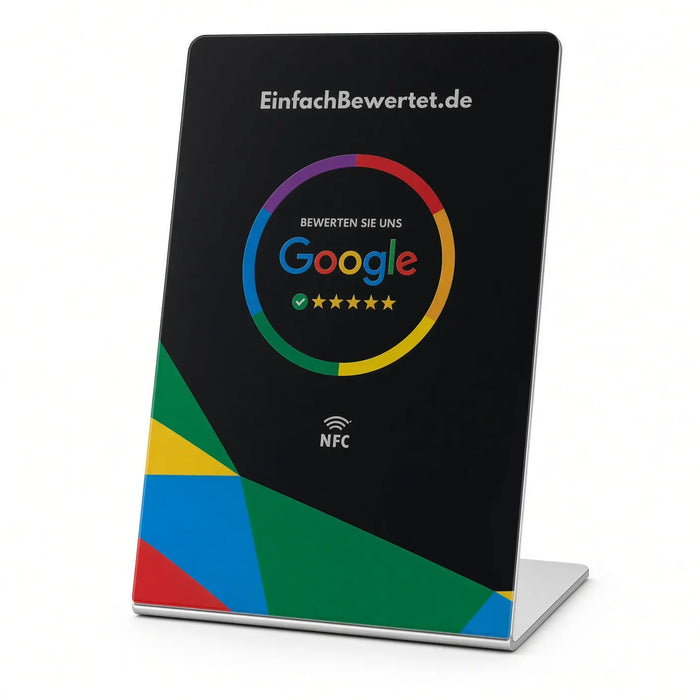
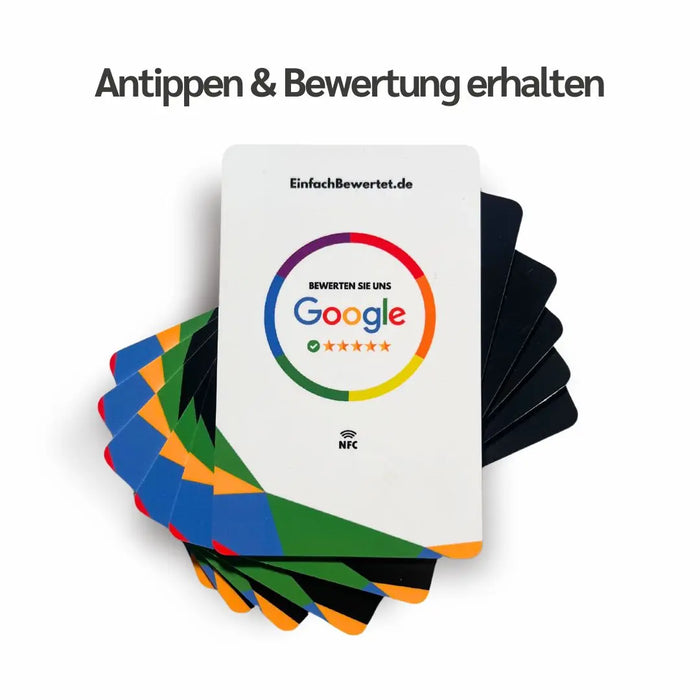
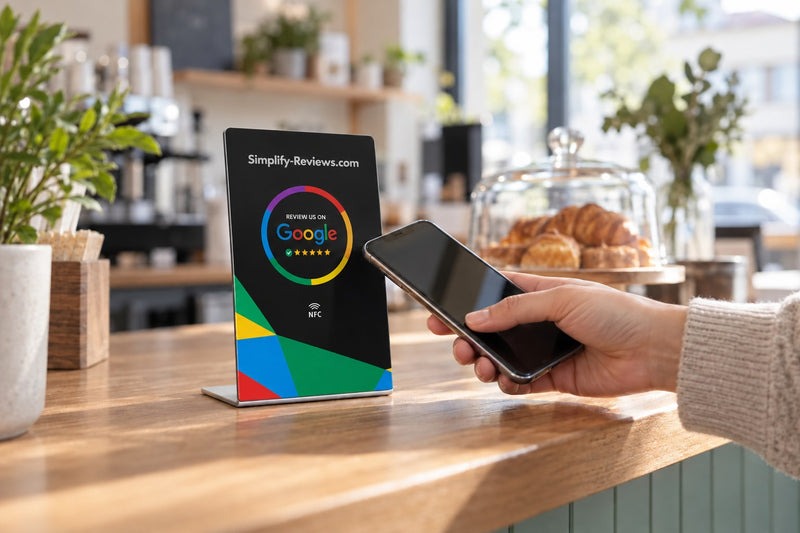
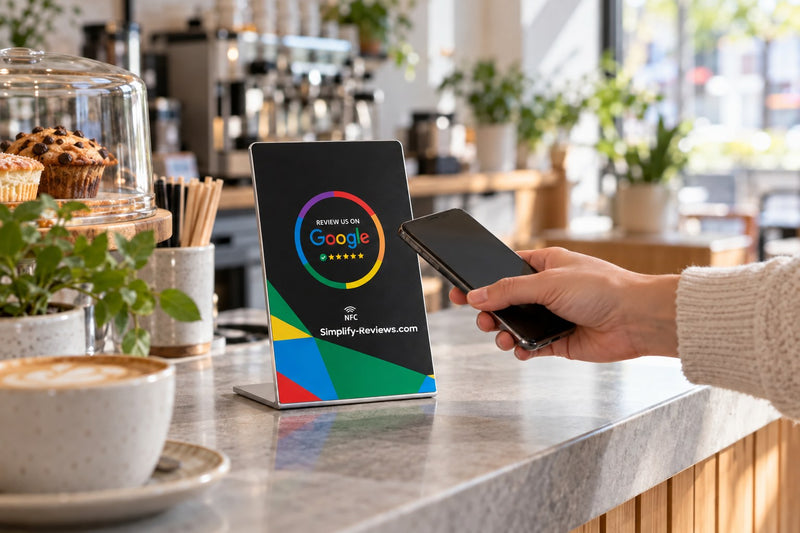
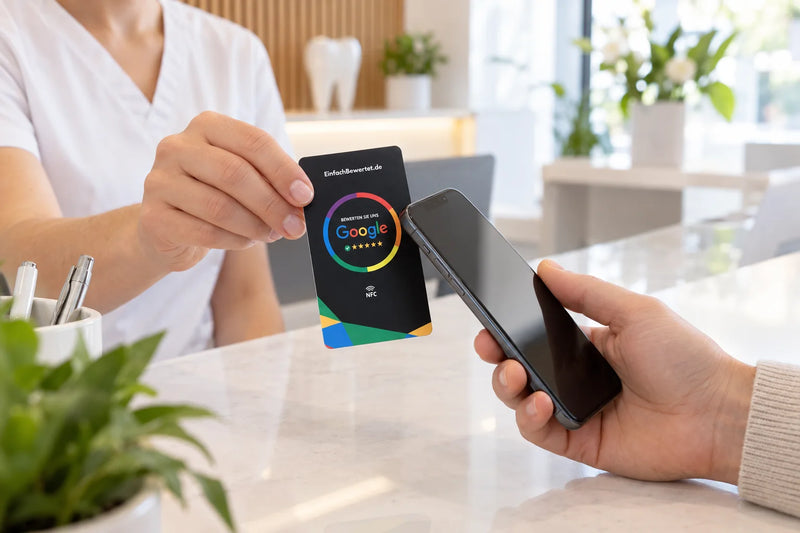
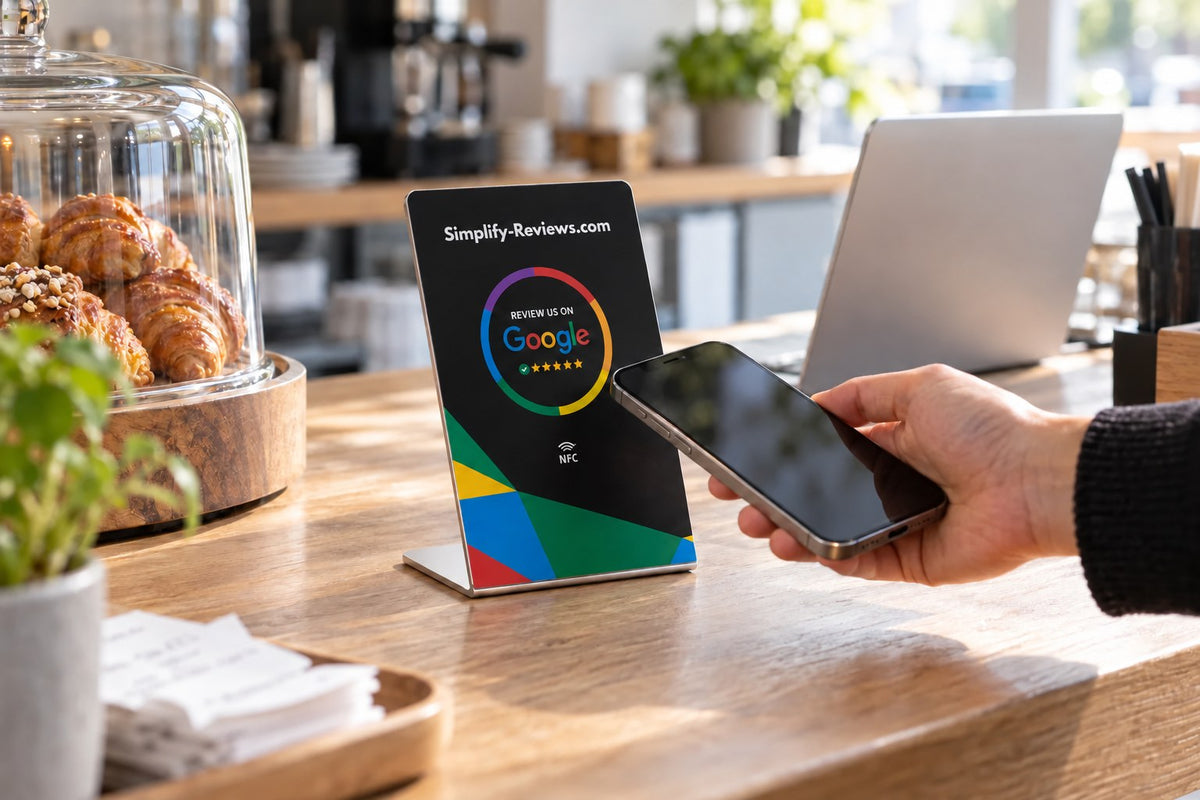
We help local businesses manage reviews more cleanly and collect new reviews in line with the rules. For unjustified reviews, we offer our PDF guide to deleting Google reviews. For ongoing review generation, many businesses set up a fixed contact point, such as the Google review display stand with NFC, a Google review card with NFC or a review link for the email signature. NFC takes customers directly to the review form with a tap; the QR code serves as a fallback for older devices.
Frequently asked questions
Can reviews be deleted on Google?
Yes, reviews can be deleted if they violate policies or are legally impermissible. Businesses can report the review; the author can also edit or remove their own review. Factual negative criticism, however, is not automatically deleted.
How do I get rid of a bad Google review?
First save a screenshot, check the customer contact and report the review in your Business Profile with the appropriate reason. If Google rejects the report, you can submit a one-time appeal and use additional evidence. In parallel, you should respond professionally while the review is visible.
Is a negative Google review a criminal offence?
Not every negative review is a criminal offence; genuine experiences and opinions are generally allowed. It can become problematic if the review insults someone, knowingly makes false factual claims, threatens, extorts or publishes personal data. In serious cases, you should have a lawyer check whether a criminal-law or civil-law response makes sense.
What should you do about an unjustified Google review?
With an unjustified Google review, you should not respond impulsively. First secure evidence and identify the specific reason for removal. Then report the review to Google, appeal if rejected and respond publicly only in a factual way. If there is no customer contact, document precisely why you cannot identify the person.
Can I reward customers in Germany for a Google review?
No, discounts, gifts, free products or other benefits in exchange for reviews are not allowed. Google expressly prohibits incentives for posting, changing or removing reviews. Instead, ask all customers neutrally for an honest review.
How do I delete a Trustpilot review?
Businesses can also report reviews on Trustpilot if they violate the platform’s guidelines. However, the platform likewise states that a negative review or one perceived as unfair is not, on its own, sufficient grounds for removal. So check the same points there first: genuine contact, policy violation and evidence.
Sources
- Google Business Profile Help: Report inappropriate reviews on your Business Profile
- Google Maps policies: Prohibited and restricted content
- Google Legal Help: File an appeal against removal of a review in Germany
- Google Business Profile Help: Report extortion attempts involving negative reviews
- Google Business Profile Help: Create a link or QR code to request reviews
- Google Business Profile Help: Improve your ranking in local search results
- BGH judgment VI ZR 1244/20: Review obligations when guest contact is disputed
- German Federal Ministry of Justice: German Unfair Competition Act (UWG), Annex to Section 3(3)
- Trustpilot: Guidelines for businesses
Read more
- How to spot fake reviews
- Review response templates
- Google reviews and ranking
- All products for more reviews
Title image: illustrative image (AI-generated)