Replying to Reviews: Templates for Praise and Criticism
Ready-to-use reply templates for positive, neutral and negative Google reviews – with rules, examples and industry tips.

Short answer: A good reply to a customer review is brief, personal and mentions a specific detail from the review. For positive reviews, a thank-you in 1–3 sentences is often enough; for negative feedback, you should respond calmly, acknowledge the issue and move the conversation to phone or email. Use templates only as a framework: name, reason, location and contact method must be adjusted before publishing.
- For 55% of online shoppers, customer reviews are the most important source of information before buying; the Bitkom study is based on 1,103 internet users aged 16 and over in Germany.
- Replies to Google reviews are publicly visible once they have been approved.
- You may ask customers for honest reviews, but you must not offer discounts, gifts or other incentives for reviews.
- Negative reviews cannot be removed simply because they are unpleasant; removal is mainly possible when guidelines have been violated.
- Reviews and helpful replies can support local visibility; however, a specific ranking must not be promised as a result.
Last updated: November 2026. Scope: local businesses in Germany, especially hospitality, medical practices, trades, automotive, retail, beauty, pharmacies, opticians and branch-based businesses.
What makes a good reply to a customer review?
A good reply to a customer review says thank you, refers to a specific detail and shows other readers that your business takes feedback seriously.
The reply is not only for the person who left the review. It is also read by future customers who are deciding whether to eat with you, book, buy, call or make an appointment. That is why every reply should be clear, friendly and concise.
A practical basic formula is:
- Thanks: “Thank you very much for your review, [Name].”
- Reference: “We’re pleased that you liked [specific detail].”
- Closing: “We look forward to your next visit / please feel free to contact us if you have any questions.”
Example of a good reply to a positive review:
“Thank you very much for your lovely review, Ms Müller. We’re delighted that the quick appointment scheduling and friendly advice stood out to you. We look forward to welcoming you again next time.”
Important: The template must never sound like a mail merge. Replace at least the name, the reason and one detail from the review. In sensitive sectors such as medical practices, physiotherapy, pharmacies, tax advice or law firms, you should not publicly confirm any health, financial or case details.
Which review reply templates can you copy right away?
You can use the following review reply templates directly if you adjust the placeholders before publishing.
| Situation | Ready-to-use reply template |
|---|---|
| 5 stars without text | “Thank you very much for your great review, [Name]. We really appreciate your trust.” |
| Positive review with praise | “Thank you, [Name], for your kind words. We’re especially pleased that [specific praise] made such a positive impression on you.” |
| Good customer review with return visit | “Many thanks for your review, [Name]. It’s great that you visited us again and highlighted [detail]. See you next time.” |
| 4 stars with a minor criticism | “Thank you for your honest feedback, [Name]. We’re pleased that [positive point] worked well for you. We’ll take your comment about [criticism] on board internally.” |
| 3 stars without explanation | “Thank you for your review, [Name]. If you’d like to briefly let us know what we can improve, you can reach us via [contact method].” |
| 1–2 stars with criticism | “Thank you for your feedback, [Name]. We’re sorry that your experience did not meet your expectations. Please contact us via [contact method] so we can clarify the matter personally.” |
| Cannot be clearly assigned | “Thank you for your feedback. So far, we have not been able to clearly identify the situation described. Please contact us via [contact method] with further details.” |
| Suspected fake review | “We cannot verify the situation described from our records and have reported the review for checking.” |
These text snippets are intentionally short. Replies that are too long can quickly come across as defensive or promotional. Google itself recommends keeping replies clear, helpful and polite, and not writing them like a sales pitch.
How do you write a good reply to a positive review?
A good reply to a positive review says thank you sincerely, does not simply repeat standard phrases and makes the praise tangible for other readers.

Illustrative image (AI-generated)
For a short positive review, this is enough:
“Thank you very much, [Name]. We really appreciate your review and your trust.”
For a detailed positive review, it is better to write:
“Thank you very much for your detailed review, [Name]. We’re especially pleased that [service/product/experience] stood out to you positively. This is exactly what we focus on in our day-to-day work. It was lovely to have you with us.”
For a reply to a good customer review in a restaurant:
“Thank you very much, [Name]. We’re delighted that you enjoyed [dish/service/atmosphere]. We’ll gladly pass your praise on to our team and look forward to your next visit.”
For a reply to a good review in the trades:
“Thank you very much for your review, [Name]. We’re pleased that you were happy with the workmanship and coordination on site. We hope you enjoy the result.”
For a medical practice or pharmacy:
“Thank you very much for your kind review. We’re pleased that you felt well looked after with us. Your feedback means a lot to our team.”
The final sentence should not sound like advertising. Avoid phrases such as “Book your next appointment now” or “Be sure to recommend us”. A calmer closing is better: “We’ll be happy to be there for you again.”
How do you respond professionally to a negative review?
You respond professionally to a negative review by staying calm, acknowledging the feedback and moving the clarification out of the public space.
A good negative review reply has four elements:
- Thanks: “Thank you for your feedback.”
- Empathy: “We’re sorry that you had this impression.”
- No public discussion of details: no invoice numbers, diagnoses, internal names or blame.
- Contact method: “Please contact us via [email/phone] so we can clarify this personally.”
Good reply to a negative review template:
“Thank you for your feedback, [Name]. We’re sorry that your experience did not meet your expectations. We would like to understand what happened and find a solution. Please contact us directly via [contact method] so we can clarify the details personally.”
If you believe the allegation is not correct:
“Thank you for your feedback. We take criticism seriously, but based on our records we are currently unable to clearly verify the process described. Please contact us via [contact method] so we can review the matter.”
Sentences like these are not recommended:
- “That’s not true.”
- “It was your own fault.”
- “Our other customers see it differently.”
- “This review is unfair and damaging to our business.”
Replies like this rarely convince the reviewer – and can quickly look unprofessional to silent readers. If a review is insulting, demonstrably fabricated or cannot be assigned to a real case, also check the reporting function. You can also find objective step-by-step help in our guide to dealing with bad Google reviews.
How do you reply to 3- or 4-star feedback?
The best way to reply to mixed feedback is to say thank you, acknowledge the positive part and specifically state that you will review the criticism internally.
Three- and four-star reviews are often more valuable than pure praise because they show specific areas for improvement. The reply should therefore not sound disappointed. It should show: we are listening.
Template for 4 stars:
“Thank you for your review, [Name]. We’re pleased that [positive point] worked well for you. We take your comment about [criticism] seriously and will discuss it with the team.”
Template for 3 stars without text:
“Thank you for your review, [Name]. If you’d like to briefly let us know what was missing for a fully positive experience, we’d be happy to receive a message at [contact method].”
Template for mixed feedback at a car dealership or workshop:
“Thank you for your honest feedback. We’re pleased that you were happy with [e.g. advice/reception/repair]. We’ll take note of your comment about [e.g. waiting time/call-back/appointment coordination] and review how we can improve here.”
The tone matters: do not publicly question why it was “only” 3 stars. That can quickly sound accusatory. Offering a contact option is enough.
May I give customers a review template or form?
You may ask customers neutrally for an honest review, but you should not give them a positive review template or specify desired content.
A customer review form can be useful if it remains internal or is worded neutrally. For public Google reviews, the customer must be free to decide whether to leave a review, how many stars to give and what to write. Among other things, Google prohibits incentives for reviews, specifically asking for positive reviews and preventing negative reviews.
A neutral request is allowed, such as:
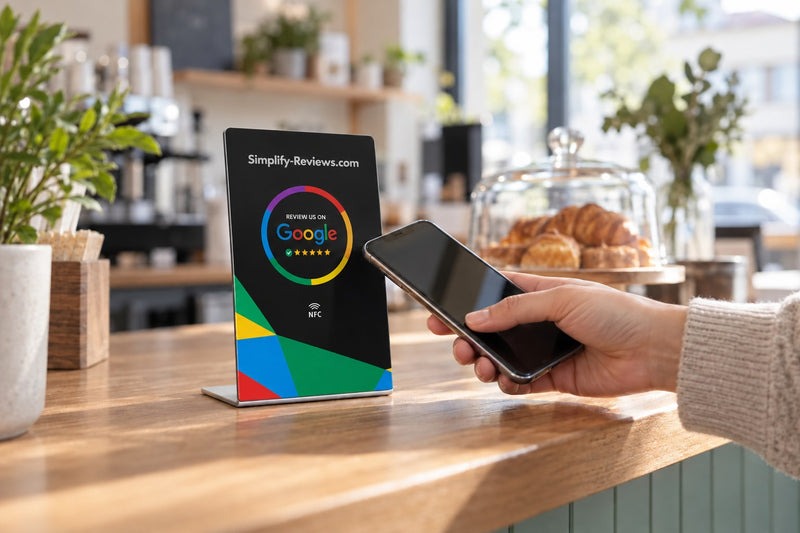
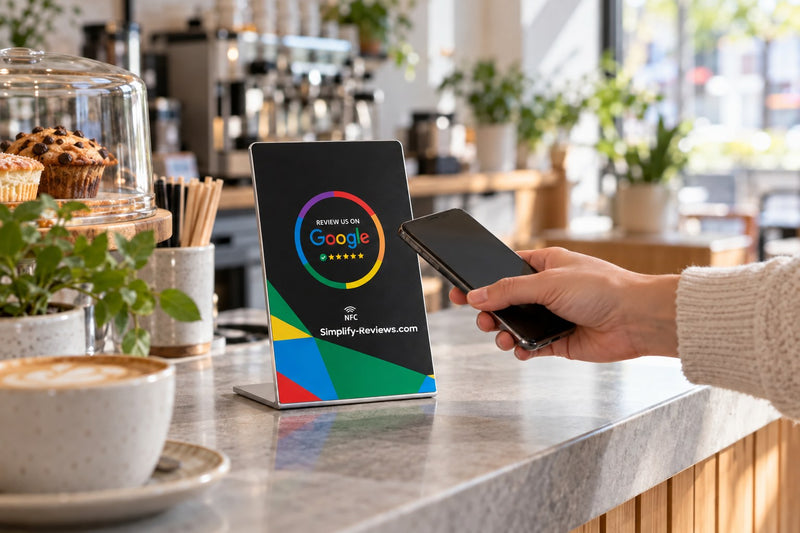
“If you have experienced our service, we’d appreciate an honest Google review. Simply scan the QR code or tap the NFC stand with your smartphone.”
Not recommended:
“Please write a 5-star review and mention our employee Max.”
Instead of a “template for writing a fantastic review”, neutral guidance is better:
“What was the reason for your visit? What worked well? Was there anything we could improve? Would you recommend us?”
If you want to ask for reviews in a legally safer way, also read our post Asking customers for reviews: templates & legal tips and the article Review gating is prohibited in Germany.
Which legal and data protection rules apply when replying?
When replying to reviews, the rule is: do not publicly confirm personal details, do not offer incentives and do not publish unproven allegations.
This is especially important in these sectors:
- Medical practice, dentist, physiotherapy: do not confirm treatment, diagnosis, appointment type or a patient relationship.
- Pharmacy and optician: do not mention health data, medication references or details about visual aids.
- Lawyer, tax adviser, insurance: do not make mandate, contract or claims details public.
- Trades and automotive: do not publish invoice numbers, addresses, licence plates or internal names.
The GDPR principles include data minimisation, purpose limitation, and integrity and confidentiality. Your reply should therefore only contain what is necessary for public communication.
Safe practice reply:
“Thank you for your feedback. For data protection reasons, we cannot discuss any details here. Please contact our team directly via [contact method] so we can clarify your concern personally.”
For legal, data protection or health-related questions, your individual situation should be reviewed by a specialist. You can find a more detailed overview in our post GDPR and customer reviews.
How do reply templates differ for restaurants, medical practices, trades and automotive businesses?
Reply templates differ by industry mainly in tone, data protection risk and the specific reason for the review.
Hospitality: restaurant, café, snack bar, hotel
Guests often review taste, service, waiting time and atmosphere. Replies can be friendly and a little more personal.
Positive template:
“Thank you very much, [Name]. We’re delighted that you enjoyed [dish/breakfast/service]. We’ll gladly pass your praise on to our team.”
Negative template:
“Thank you for your feedback. We’re sorry that [waiting time/service/quality] did not meet your expectations. Please write to us at [contact method] so we can understand your visit.”
Healthcare: physiotherapy, dentist, medical practice, pharmacy, optician
Restraint matters here. Do not confirm any treatment.
Positive template:
“Thank you very much for your kind review. We’re pleased that you felt well looked after with us. Your feedback means a lot to our team.”
Critical template:
“Thank you for your feedback. For data protection reasons, we cannot discuss any details here. Please contact us directly so we can clarify your concern personally.”
Trades and construction
Customers review punctuality, communication, cleanliness and results.
Positive template:
“Thank you very much for your review, [Name]. We’re pleased that you are happy with the coordination, workmanship and result. Our team really appreciates it.”
Critical template:
“Thank you for your feedback. We would like to understand what did not work well with [appointment/coordination/execution]. Please contact us via [contact method] so we can review the job.”
Car workshop and dealership
Typical topics are advice, repairs, handover, waiting time and transparency.
Positive template:
“Thank you very much for your review. We’re pleased that you were happy with [advice/repair/vehicle handover]. Safe travels and see you next time.”
Critical template:
“Thank you for your feedback. We would like to review the matter and clarify it with you. Please contact us via [contact method] with your concern.”
How do you organise customer review replies within the team?
The best way to organise review replies is with fixed roles, 6–10 approved templates and a weekly review appointment.

Illustrative image (AI-generated)
Especially in branches, practice teams, workshops and restaurants, mistakes happen when nobody is responsible. Reviews then remain unanswered, or several people respond in different ways. A simple process is usually enough:
- Define responsibility: Who checks new reviews?
- Set time slots: for example every morning or three times a week.
- Create a template folder: positive, neutral, negative, suspected fake, data protection.
- Clarify escalation rules: When does the owner, practice manager or branch manager decide?
- Document the reply: date, review type, template used, open follow-up question.
A pragmatic benchmark is replying within 24 to 48 hours. This is not a legal deadline, but it feels reliable in day-to-day business. Google recommends replying promptly when feedback is important and new information needs to be shared.
Do not use templates to automate everything. Use them so good replies are still possible on stressful days.
Our view
Our view is that the best review reply is not the most creative one, but the most reliable one. In local businesses, we often see two extremes: either no one replies because day-to-day work leaves no time, or very long justifications are written as soon as a negative review appears. Both cost you trust.
What works really well is a lean process. Positive reviews receive a personal thank-you with a specific detail. Neutral reviews are treated as a learning opportunity. Negative reviews are not discussed publicly, but are acknowledged calmly and moved into a personal conversation. This is particularly important in hospitality, healthcare, trades and automotive, because potential customers often compare several providers and look not only at stars, but also at the company’s tone.
Templates are not a substitute for attitude. But they do prevent employees from wording things poorly under time pressure. Our advice: create a small number of approved text snippets, give your team brief training and check once a month whether the replies still sound natural. If you collect reviews, you should also visibly show that feedback is being read.
— Simplify Reviews Team
How we help
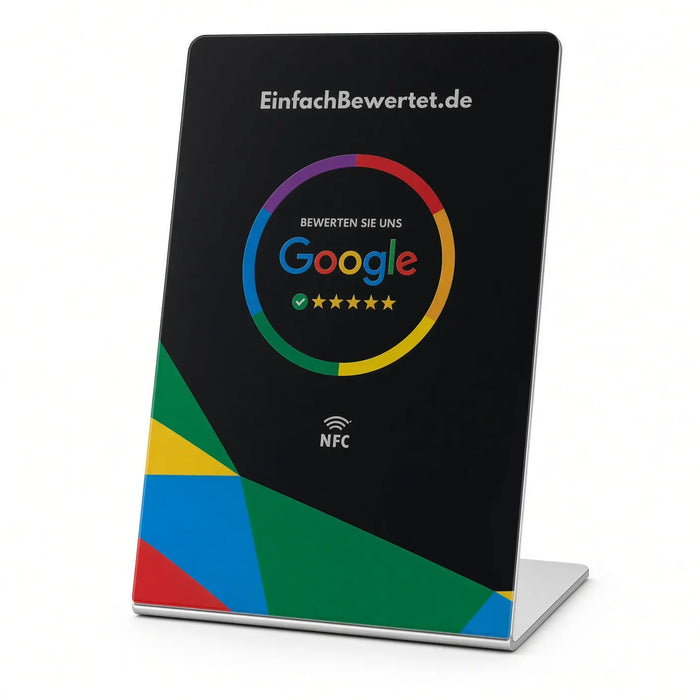
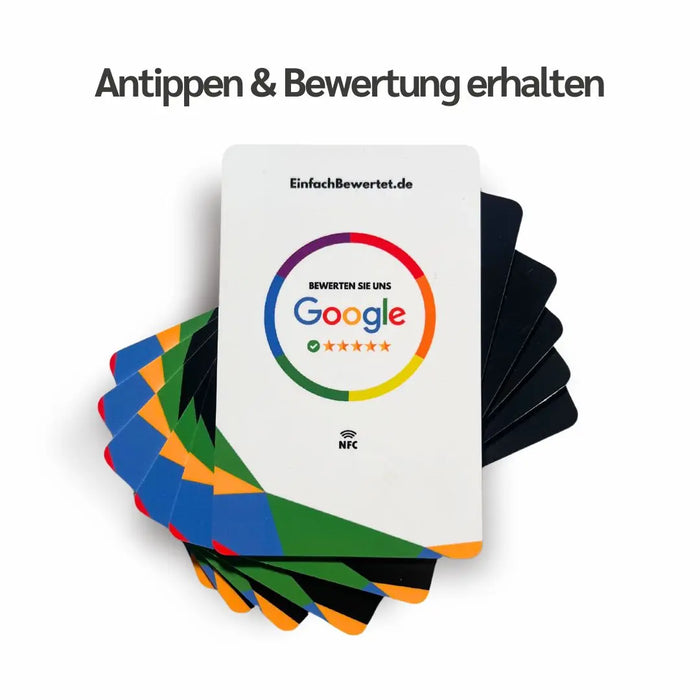
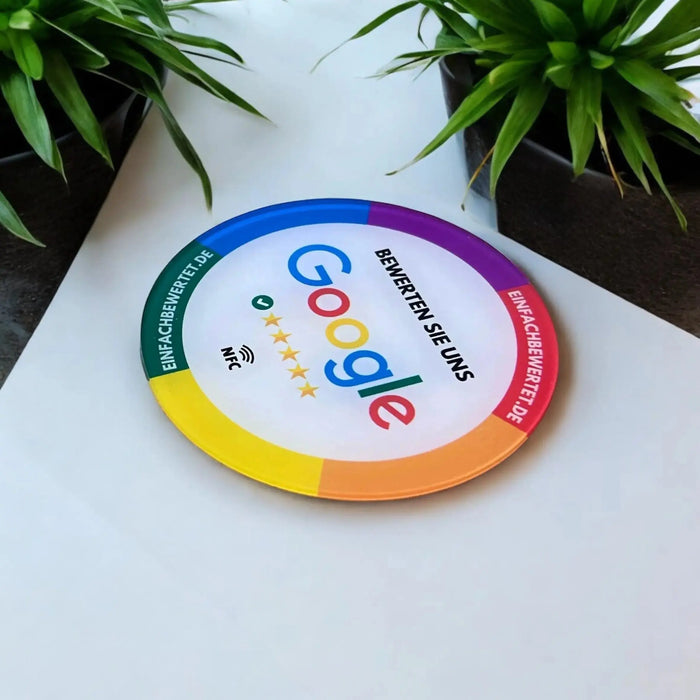
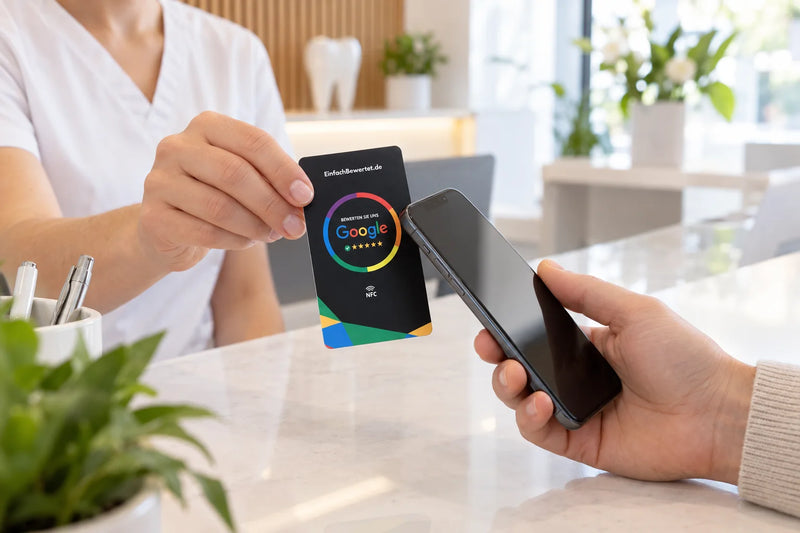
We help local businesses collect more honest Google reviews more easily and then respond to them professionally. The Google review stand (NFC) sits directly at reception, the counter or the consultation desk: customers tap it with their smartphone and land on the review form; the QR code serves as a fallback. For mobile teams, the Google review card (NFC) is suitable, and for emails the review link for the email signature. If your business profile itself needs to be optimised, we can also support you with Google Business Profile optimisation.
Frequently asked questions
How do you write a good reply to a positive review?
Say thank you, mention a specific detail and close in a friendly way. Example: “Thank you very much, [Name]. We’re delighted that you liked [detail]. We look forward to your next visit.” Avoid exaggerated promotional phrases.
What is a good template for replying to a negative review?
A safe template is: “Thank you for your feedback. We’re sorry that your experience did not meet your expectations. Please contact us via [contact method] so we can clarify the matter personally.” Do not disclose confidential details publicly.
Should you reply to every Google review?
No, not necessarily every single one. Google points out that replies are useful when new or relevant information is being shared; many businesses still reply to almost all reviews because it shows appreciation. For simple 5-star reviews, a short thank-you is enough.
May I reward customers in Germany for a Google review?
No. Discounts, gifts, free services or prize draws in return for reviews are not permitted under Google’s guidelines. Instead, neutrally ask all suitable customers for an honest review – without pressure and without requesting a specific star rating.
How can I have a negative Google review removed?
You can report a review if it violates guidelines, for example in cases of spam, insults or fabricated content. Factually correct criticism is usually not removed simply because it is negative. Document the case and use the reporting function in the Business Profile.
What helps restaurants, medical practices, tradespeople and automotive businesses get more reviews?
A clear moment in the process works best: after payment, after a successful appointment, after vehicle handover or after project completion. NFC stands, NFC cards and QR codes shorten the path to the review form; the important thing remains to ask all customers neutrally for honest feedback.
Sources
- Google Business Profile Help: Manage customer reviews
- Google Business Profile Help: Tips for getting more reviews
- Google Maps Help: Guidelines for user-published content
- Google Business Profile Help: Report inappropriate reviews
- Google Business Profile Help: Improve ranking in local search results
- Bitkom: Online reviews are the most important source of information
- Harvard Business Review: Study: Replying to Customer Reviews Results in Better Ratings
- European Data Protection Board: Principles relating to processing
Read more
- Create a Google review link: guide with templates
- Increase your review rate: NFC and WhatsApp for businesses
- Google reviews and ranking: why stars influence your visibility
Title image: illustrative image (AI-generated)