Get More Reviews Fast with NFC: Branding, Tech, GDPR for SMEs
Practical guidance for SMEs: how branded NFC products bring design, technology and GDPR together. Test a display stand for four weeks and measure the...
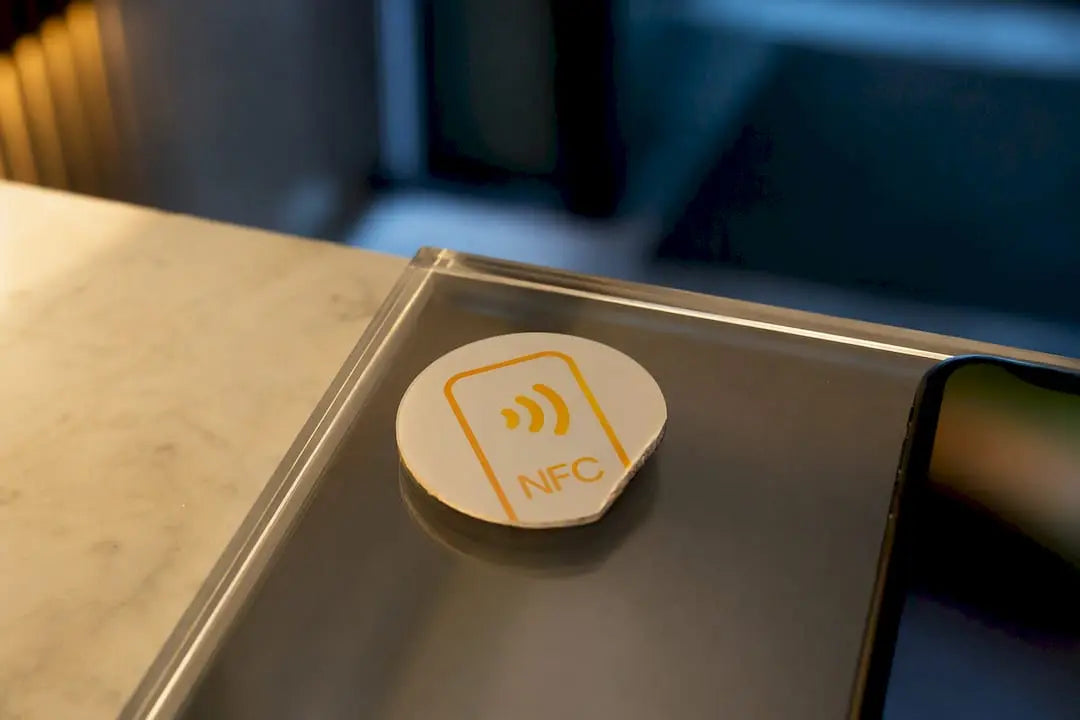
For the fastest impact on customer interaction and reviews, branded NFC display stands at the counter or NFC business cards for sales teams work best, because they shorten the path from impulse to action to a single tap. Both formats follow the NFC Forum guidelines on chip and logo use and can be implemented reliably with the NTAG chip family. Providers such as Simplify Reviews deliver these products pre-programmed with your own logo. A mobile-optimised landing page with a clear privacy notice remains essential; otherwise, you lose some of those taps.
In short:
- NFC business cards and display stands are ideal for encouraging customer reviews or contacts at the exact moment of experience.
- The material affects the durability and impact of NFC tags; metal feels more premium, while plastic is affordable and easy to print on.
- For most marketing use cases, NTAG213 is enough, as it handles simple URL redirects, while larger memory is useful for multilingual or more extensive content.
- GDPR-compliant landing pages hosted in the EU reduce risk, while dynamic redirects remain more flexible than fixed URLs.
- Always test a sample before placing a large order so you can check colour accuracy and feel before buying bigger quantities.
Table of Contents
- Which NFC promotional products are right for your branding?
- Design, materials and branding options for NFC tags
- Which NFC chips are common, and what fits your project?
- How do you set up landing pages in a GDPR-compliant way?
- Which metrics do NFC campaigns provide, and how do you evaluate them?
- Practical examples: how NFC-based brand experiences increase reviews
- How to find the right NFC provider
- Publisher’s perspective: why NFC-based brand experiences work now
- Custom NFC solutions from Simplify Reviews for your branding
- Sources
- FAQ
Which NFC promotional products are right for your branding?
The right format depends on where the interaction happens, not on budget alone. A tag at the checkout needs different qualities from one on a business card used by a field sales team.
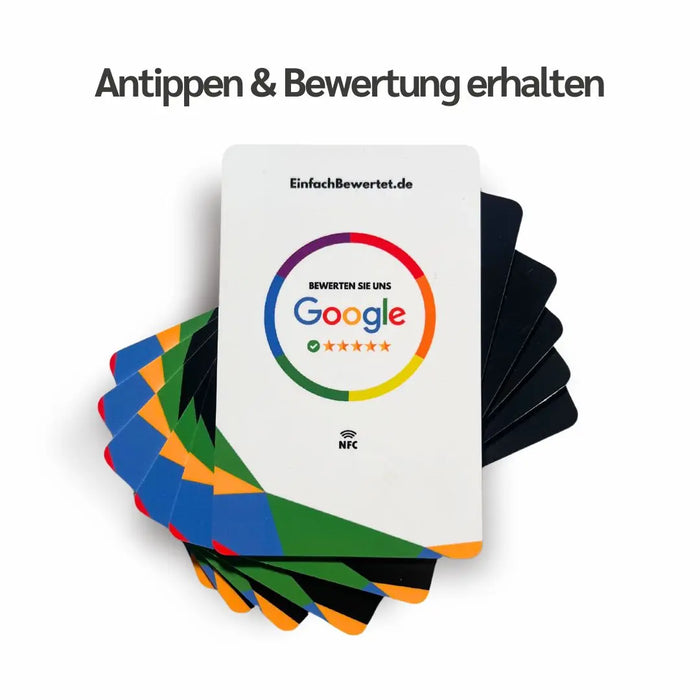
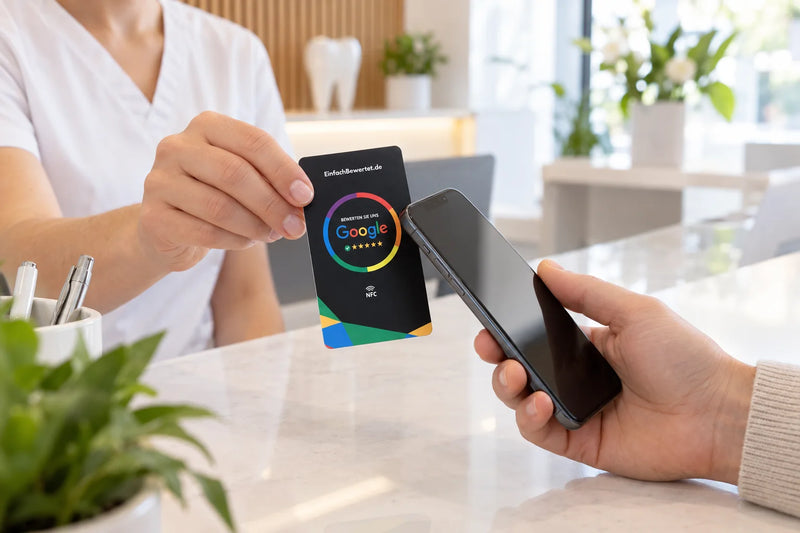
- NFC business card: ideal for sales and networking, replaces stacks of paper and works without an app right at the handshake.
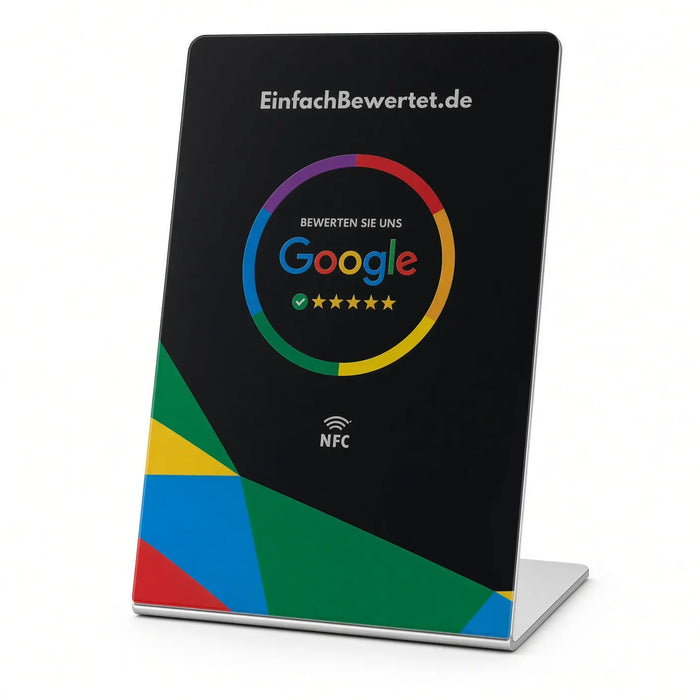
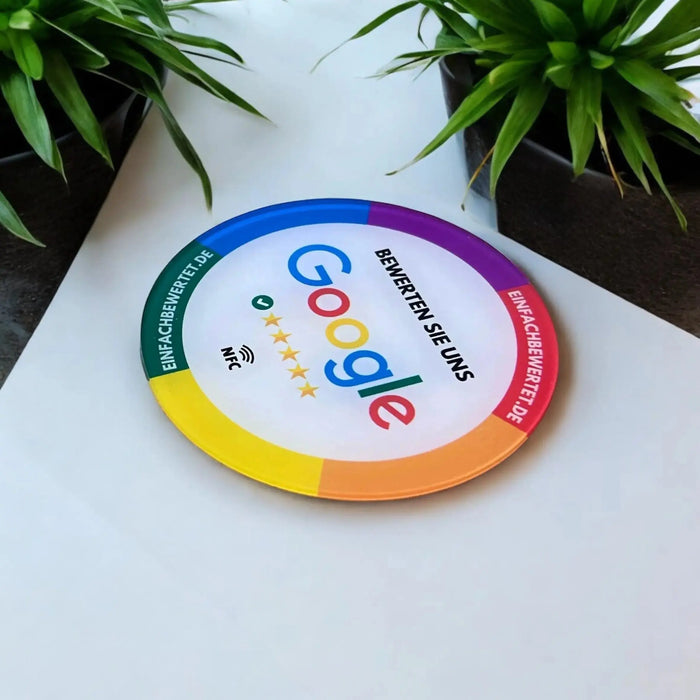
- Review display stands and counter plates: placed at the counter or on the table, especially suitable for restaurants, hotels and clinics with high customer footfall.
- NFC stickers: small, affordable and easy to apply to packaging, menus or shop windows.
- Key fobs: durable, taken away by customers and useful for repeat touchpoints, for example in gyms or garages.
- Metal cards: a premium look for high-end brands, often in credit card format, with engraving instead of printing.
- Wristbands: well suited to events and trade fairs because they stay on the body and can be used multiple times.
Production times vary widely: stickers and simple cards can often be delivered within a few days, while engraved metal versions take significantly longer. Minimum order quantities are low with most providers, but unit prices fall noticeably from medium quantities upwards.
Design, materials and branding options for NFC tags
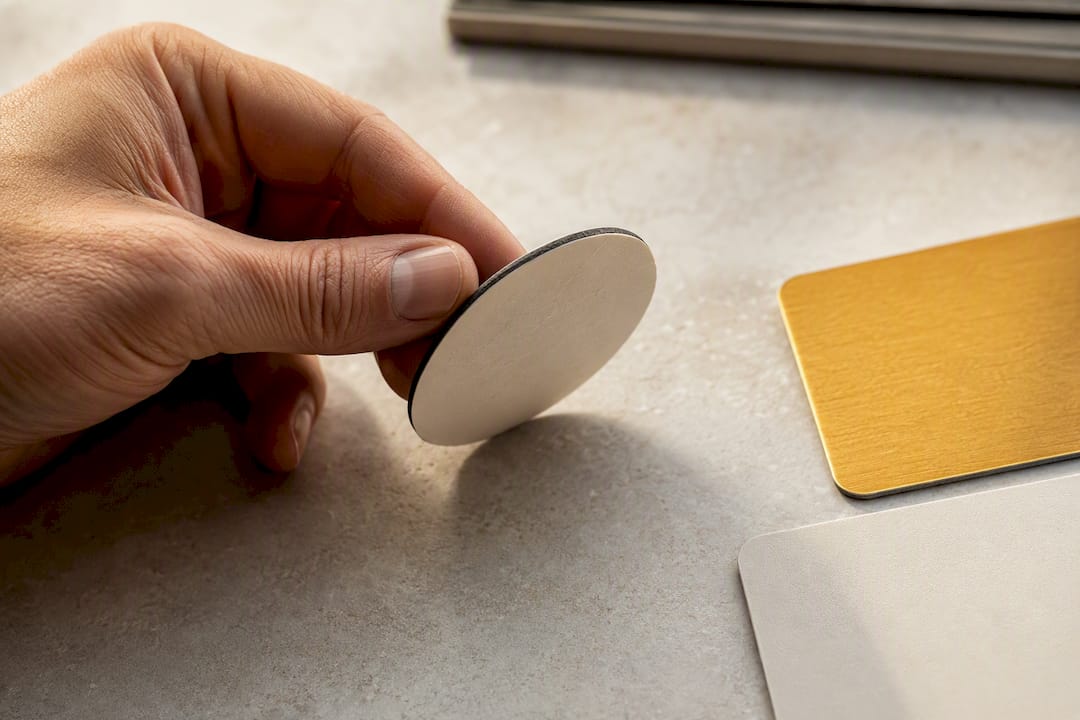
The material has a greater effect on perceived quality and lifespan than any logo. Plastic is light, affordable and easy to print on, but it loses its shine faster with daily use. Metal feels more premium and withstands knocks better, but finishing costs more. Wood or bamboo suits brands that want to highlight sustainability, such as organic shops or wellness providers.
You have several finishing options:
- Digital printing: fast, colour-rich and good for logos with many colours.
- Engraving: subtle, durable and suitable for metal and wood.
- Colour-matched carrier material: helps keep your corporate design consistent.
- 3D logo chips: a tactile detail that makes a product stand out from standard off-the-shelf items.
According to practical reports, rewritable tags with dynamic redirects reduce follow-up costs because campaign content can be changed without ordering new hardware, which significantly extends the life cycle of a giveaway. If you want to display the official N-Mark, you must follow the NFC Forum guidelines; subtle branding without the logo often works better for premium products.
Pro tip: Test a single sample in everyday use before placing a large order. Scratches and how it feels in the hand only become clear after a few days of real use.
Which NFC chips are common, and what fits your project?
NXP’s NTAG family dominates the market for promotional and review tags because it is affordable, robust and compatible with all common smartphones.
- NTAG213: smallest memory, enough for a simple URL redirect, usually the most cost-effective choice for large runs.
- NTAG215: mid-range, rarely needed for promotional applications, more common in gaming environments.
- NTAG216: largest memory, useful for multilingual content, additional data or if more needs to be stored on the tag later.
For most review and promotional applications, NTAG213 is entirely sufficient because a simple redirect requires very little memory. iOS and Android smartphones read NFC tags without an additional app as long as NFC is enabled; this is a key advantage over QR codes, which require a camera app.
For write protection, the rule is: once final programming is complete, publicly distributed tags should be locked so no one can manipulate the redirect. If you use a dynamic short link instead, you can change the landing page later without replacing the hardware. For large print runs, pre-programmed tags save time because programming already happens during production.
How do you set up landing pages in a GDPR-compliant way?
When it comes to programming, you have three options, and your choice directly affects how flexible your campaign remains later.
- Static URL: the tag points permanently to one address, simple to implement but inflexible when changes are needed.
- Short link with redirect: the tag points to a short link whose destination you can update at any time, useful for ongoing campaigns.
- White-label landing page: an intermediate page in your own design that can also offer options such as Google or Instagram.
Your landing page needs to load quickly, have a clear call to action and be immediately understandable on screen without scrolling. Accessibility matters too: recommendations from the WebAIM Screen Reader Survey show how important well-structured pages are when they need to be readable by assistive technologies.
For data protection, what matters most is where tap data ends up. Server-side hosting within the EU reduces compliance risks, because the landing page architecture determines actual GDPR compliance, not the NFC technology itself. An anonymised count of taps is completely sufficient for most marketing purposes; you should only collect personal data with explicit consent.
For public giveaways, such as at trade fairs, you should enable write protection before distribution and run spot checks to confirm that the redirect still works correctly.
Which metrics do NFC campaigns provide, and how do you evaluate them?
Every tap is a timestamp with a device type, and that is exactly what makes NFC marketing plannable: it turns offline promotional materials into something as measurable as a digital campaign.
- Total taps: the basic number for the reach of a tag.
- Tap time: shows whether campaigns perform better on certain weekdays or at certain times.
- Device type: helps with technical optimisation of the landing page.
- Conversion: the actual action, such as a submitted review or a new social media follower.
These values can be fed into common analytics or CRM systems, as long as you use data-minimising, privacy-safe tracking patterns instead of personal profiles. A useful benchmark formula is tap rate (taps per issued tag) combined with conversion rate (completed actions per tap). A simple reporting dashboard with weekly analysis is enough for most small businesses; larger chains often review values monthly by location.
Practical examples: how NFC-based brand experiences increase reviews
A review counter plate at a coffee counter works differently from an NFC business card in B2B sales, but both follow the same principle: turn the moment of satisfaction immediately into an action.
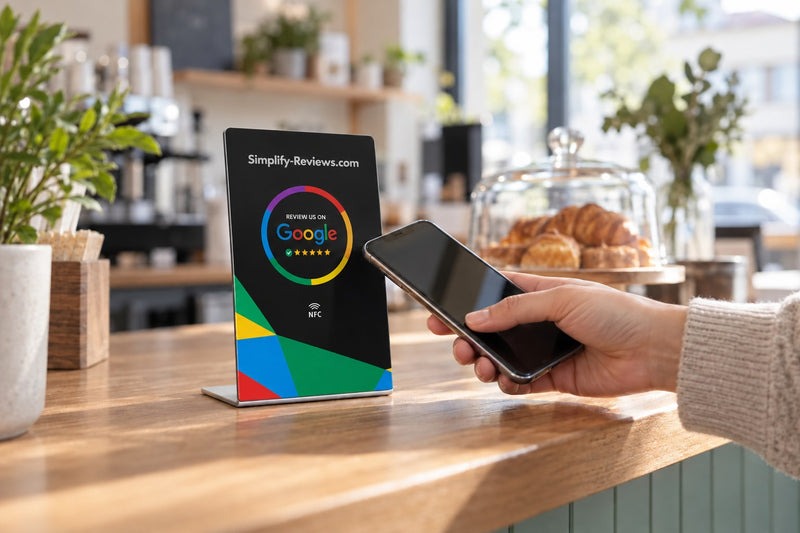
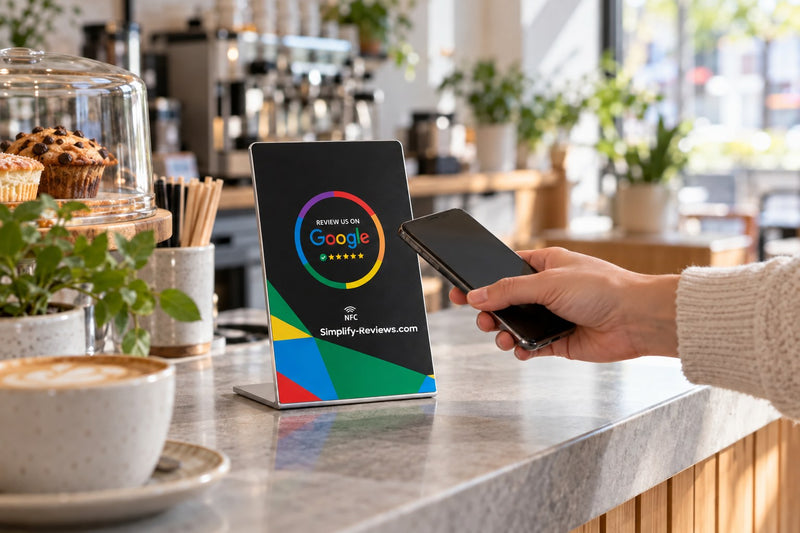
- Review counter plate at the checkout: the guest taps with their phone while paying and lands directly on the Google review page, without searching for the business name.
- NFC business card in sales: instead of paper, the field sales team hands over a card that instantly opens contact details and appointment booking.
- NFC sticker on packaging: customers go straight to product information or instructions without using a search engine.
Simplify Reviews delivers its review display stands pre-programmed with a custom logo and colour choice, so businesses can get started immediately without technical knowledge. Instagram NFC cards add the same mechanism for building social media followers.
The key difference between a printed stand with a QR code and a branded NFC tag is not the price, but the friction: one tap is faster than opening the camera app, and those few seconds often decide whether a review is submitted at all.
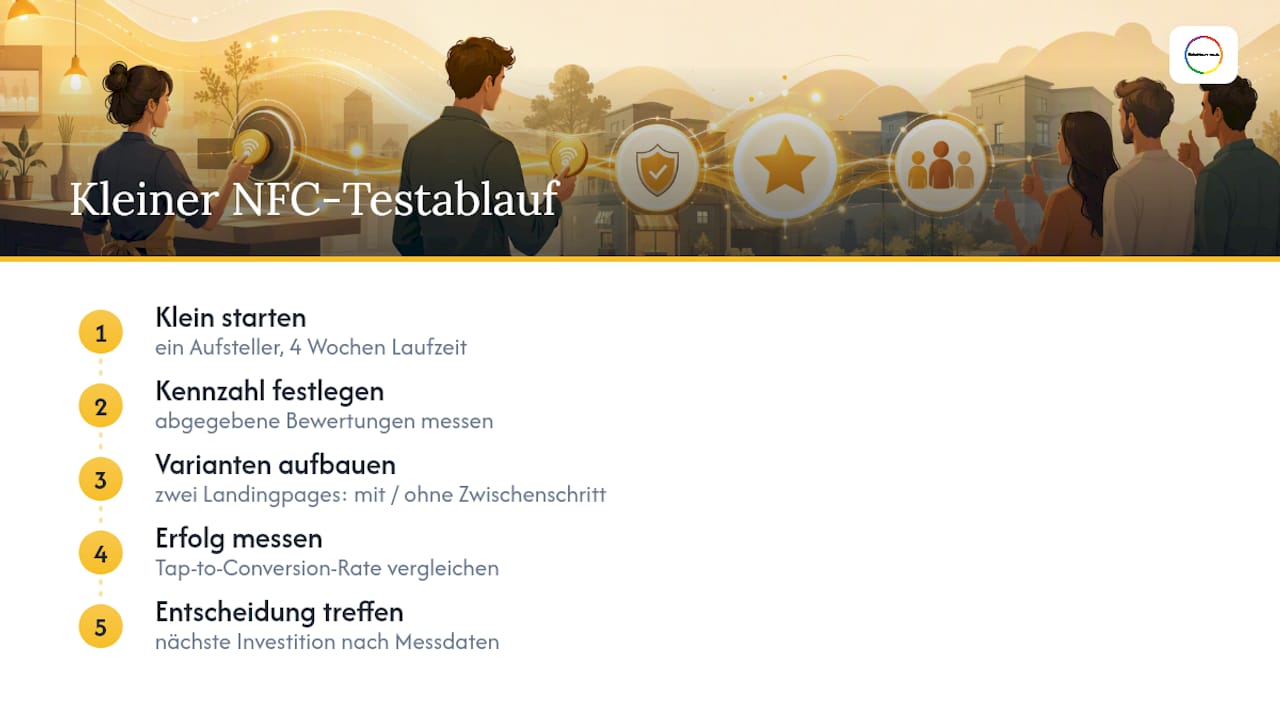
A small pilot is enough for a first test: one display stand at the counter for four weeks, with taps and submitted reviews as the KPI. If the number steadily rises, scale to additional locations or formats such as NFC business cards for sales.
How to find the right NFC provider
Not every provider delivers what is promised on the product page. A few specific questions can save you hassle later.
- Check pre-programming: Will the tag be delivered fully configured, or do you have to program it yourself?
- Clarify branding approval: Is there a design proof before printing, and how many rounds of revisions are included?
- Ask about minimum quantities and delivery times: Does the batch size fit your needs, and is the delivery date realistic for your campaign?
- Question GDPR and hosting: Where is tap data stored, and does the provider offer EU hosting?
- Test support: Does the provider answer technical questions quickly and specifically before you buy?
Typical pitfalls occur when colours differ between screen and print, which is why a test sample is almost always worthwhile before placing a large order. Costs mainly depend on chip type, material, finishing, software integration and quantity; tiered prices from medium volumes upwards are standard in the market.
Pro tip: Order a small sample pack first. That way, you can spot problems with colour or feel before you have a hundred items sitting in stock.
Publisher’s perspective: why NFC-based brand experiences work now
NFC does something many marketing activities cannot: it digitises a moment that would otherwise pass by. A satisfied customer often forgets the good experience on the way to the door if no one guides them straight to an action. That is where the real value lies, not in the chip itself.
If you are sceptical, start small. One display stand, four weeks of runtime and a clear metric such as submitted reviews are completely enough as a basis for decision-making. Test two landing page variants in parallel, for example with and without an intermediate step before the Google review, and compare the tap-to-conversion rate. When you measure instead of guessing, your next investment decision is based on real data rather than gut feeling.
— Dario
Custom NFC solutions from Simplify Reviews for your branding
Simplify Reviews is the faster alternative to DIY solutions with generic NFC tags from electronics retailers: ready-programmed review products with your own logo, without you having to worry about chip type or landing page programming.
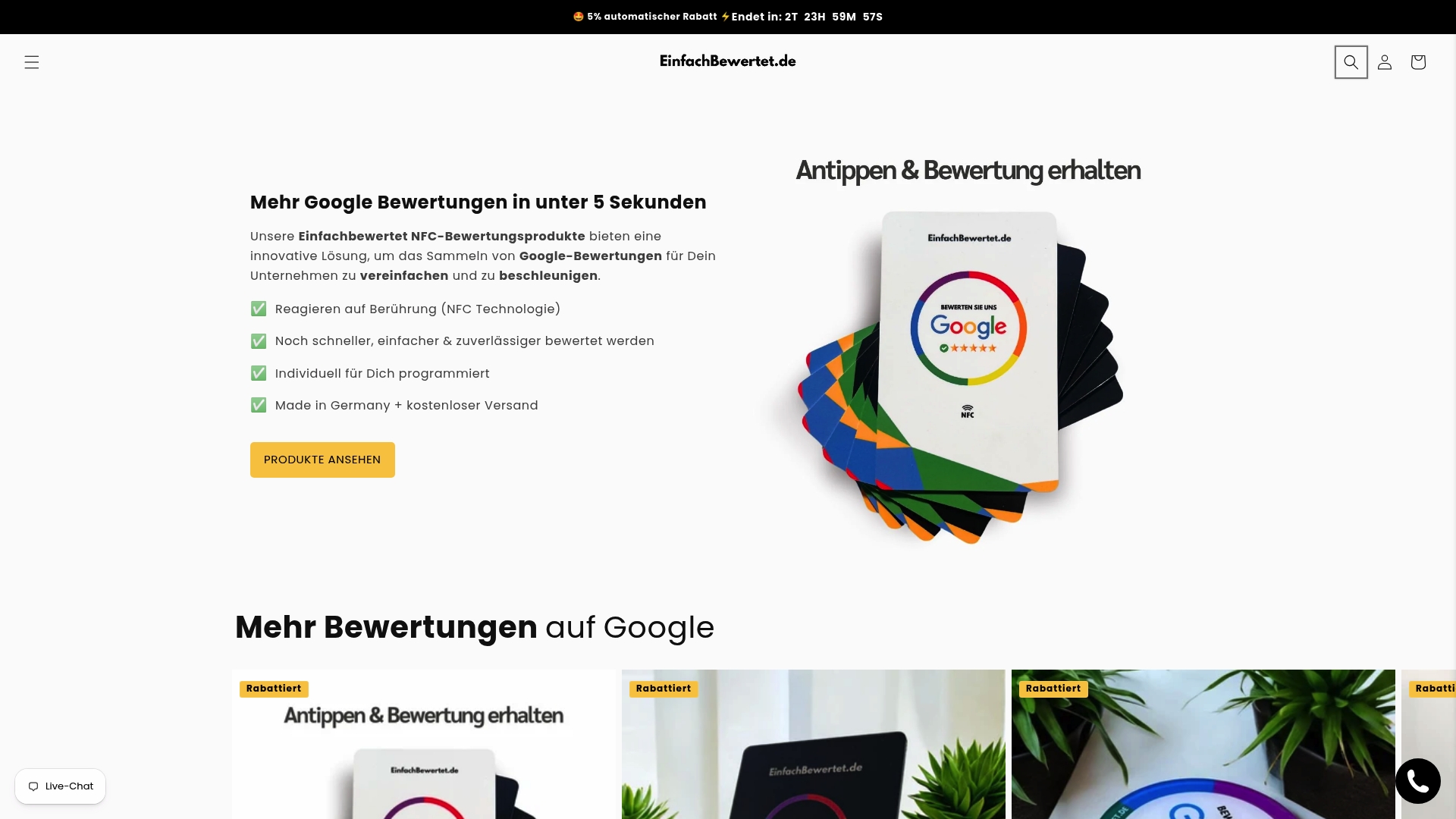
The Google review counter plate comes pre-programmed, with a custom design, and sends customers directly to the review page with a tap. You can see results in real time. There are no ongoing subscription fees and no contract lock-in, plus a money-back guarantee and free shipping. If you want your corporate design matched down to the details, you will find the right options for colour, logo and layout on the custom design page. Take a look at the full product overview and order a first sample for your location, so you can test the effect before ordering larger quantities.
Sources
- NFC Forum — Logo Assets & Guidelines
- NFC in marketing: tags, promotional items & smart giveaways | creationell
- OEM Integration | BrandTags®
FAQ
What does NFC-based branding mean in practice?
It means customising NFC products such as cards, display stands or stickers with your own logo, colours and a pre-programmed redirect to reviews, social media or product information.
Which NFC chip is suitable for simple promotional items?
For a simple URL redirect, NTAG213 is usually enough. NTAG216 is only worthwhile if you need to store more content or use multilingual landing pages.
Do customers need an app to use NFC tags?
No. Modern iOS and Android smartphones read NFC tags directly through the system function, as long as NFC is enabled.
How do you protect NFC tags from manipulation?
After final programming, the tag should be locked with write protection. Alternatively, you can use a dynamic redirect that can be changed centrally.
What data is generated when someone taps an NFC tag?
Usually only anonymised values such as time and device type. Personal data should only be collected with explicit consent and ideally via EU-hosted servers.
How quickly does Simplify Reviews deliver branded NFC products?
Simplify Reviews delivers pre-programmed, custom-designed review products with free shipping and a money-back guarantee, with no ongoing subscription costs.