Increase Your Review Rate: NFC and WhatsApp for Businesses
A practical guide with ready-to-use templates and technical steps for QR, NFC and WhatsApp. Here’s how to increase your review rate...

The best way to increase your review rate has three parts: actively and directly approach customers after purchase, reduce the review process to a single tap, and measure the results continuously. Important: buying reviews is not part of this. It does more harm than good. The specific tactics are covered in the next section.
In short:
- An active, direct request for reviews immediately after a positive experience can increase the rate to up to 83 percent, while passive waiting strategies have little effect.
- The ideal review range is between 4.0 and 4.7 stars, as this variation feels more credible and achieves better conversion rates.
- Fast, simple review links via QR codes, NFC or SMS significantly increase completion rates, especially when they reduce the process to one click.
- Ask all customers for a review equally, without pre-screening, and avoid sending the request on the same day as the invoice.
- Measure KPIs such as review rate, average star rating and response time regularly so you can keep optimising your strategy and set realistic goals.
Table of contents
- What review rate is realistic? Benchmarks and target values
- Specific, field-tested strategies to increase your review rate
- Implementing the technology: using QR, NFC and automation correctly
- Measure and test: KPIs, benchmarks and simple A/B tests
- Mistakes, compliance and red flags: what you need to avoid
- Why review rate matters (conversion / visibility)
- Main factors that influence review rates (timing, process, channel, industry)
- Author’s view: Simplify Reviews’ experience with NFC solutions
- Specific offer: NFC review products from Simplify Reviews as a fast solution
- Sources
- FAQ
What review rate is realistic? Benchmarks and target values
If you plan without benchmarks, you risk setting unrealistic targets, which can lead to measures being stopped too early.
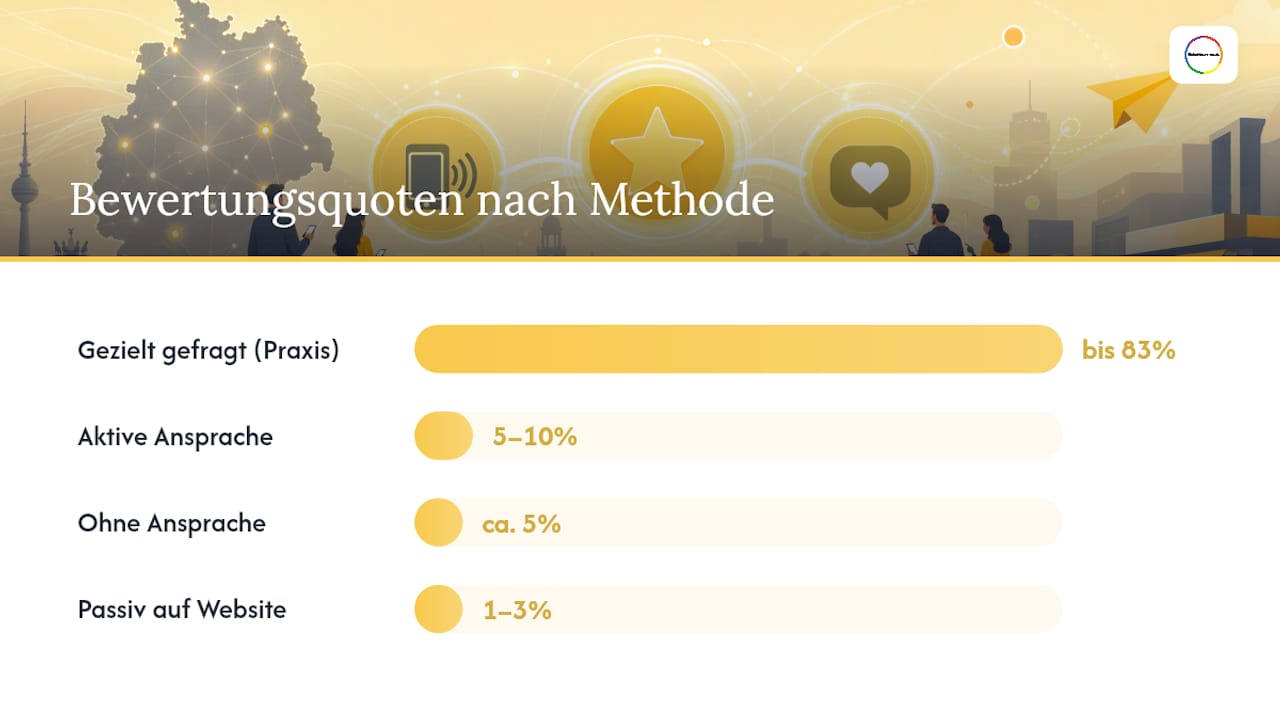
When customers are asked in a targeted way, however, the rate rises to up to 83 % according to practical data on review generation. This difference alone explains why passively waiting for reviews is the weakest strategy of all.
For the average star rating, there is a useful rule of thumb: the goal is not a perfect 5.0, but a range with some variation in the stars. An analysis of the impact of online reviews on sales shows that offers in this range convert better than those with consistently perfect ratings. Buyers distrust a flawless facade; a few 3- to 4-star reviews feel more credible than an unbroken top score.
And the effect on revenue is anything but theoretical: studies on customer reviews show that over 70 % of consumers make their purchase decision dependent on positive reviews.
Specific, field-tested strategies to increase your review rate
The order in which you ask for a review often matters more than the wording itself. Ask too late and you lose the emotional moment. Ask too pushily and you lose the customer.
- Link the timing precisely to the success moment. Ask immediately after the positive experience, directly after the service is completed or shortly after the goods are received. The greater the time gap, the weaker the memory and the lower the response rate.
- Structure the channel sequence deliberately. Start with WhatsApp or SMS, as these channels achieve significantly higher open rates than email according to practical guides on review generation. Use email as a second contact and add on-site prompts or QR codes at the point of sale as a third layer.
- Reduce the path to a review to one tap. Direct links, short links, QR codes and NFC technology decisively lower the barrier. Every extra click costs conversions. A link that immediately opens the Google review window works noticeably better than one that only leads to the business profile.
- No incentives for reviews. Google prohibits any form of compensation for reviews, including discounts, gifts or bonuses, regardless of the star rating.
- Respond to every review, publicly and in a solution-oriented way. Negative reviews will not disappear as a result, but your response shows all future readers how you handle criticism.
Not every industry works the same way. A trades business has different customer contact moments than a restaurant. The guide to customer reviews for trades businesses shows that the handover moment after project completion is the most effective time to ask, well ahead of any later follow-up email.

Pro tip: Never send the review request on the same day as the invoice. Separate the two messages by at least one day; otherwise, the request for a review feels like an attachment to the payment request and is often ignored.
The channels that create the least friction in practice include:
- Direct sending via WhatsApp with a pre-written link
- QR code on the invoice or table display
- NFC card or NFC sticker for the moment directly at the counter
- Short SMS with review link after an appointment is completed
Implementing the technology: using QR, NFC and automation correctly
The technology behind the review request often determines success or failure, regardless of how good the customer contact was. A QR code can be created in just a few minutes: you store your company’s Google review URL in a short-link service and convert it into a code that can be placed on table displays, receipts or business cards.
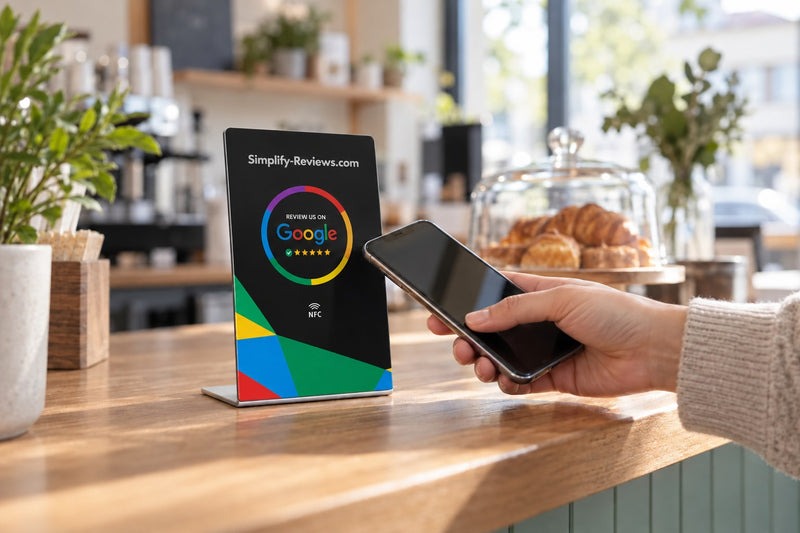
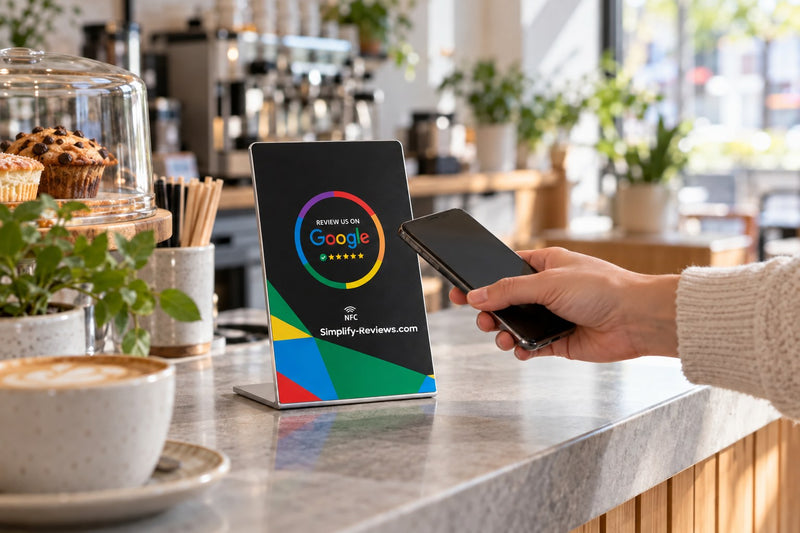
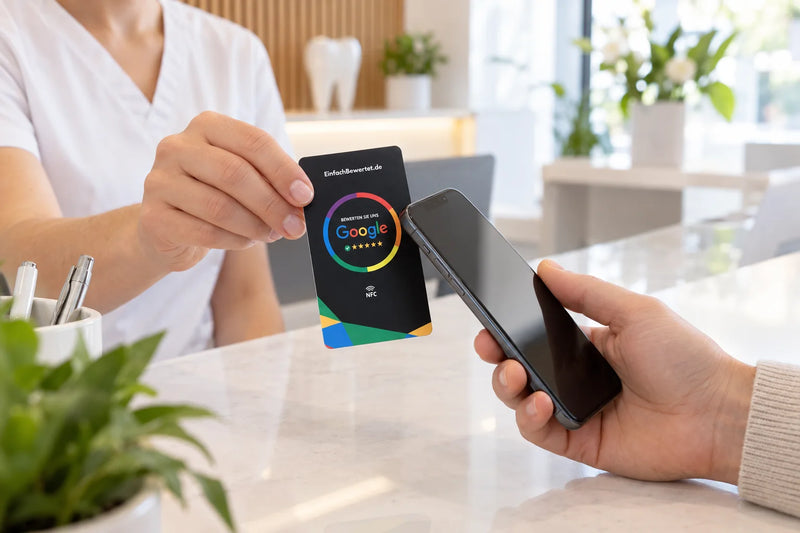
NFC technology goes one step further. Instead of opening a camera and scanning a code, the customer simply holds their smartphone up to the card, display or coaster, and the review window opens directly. Typical locations include the table in a restaurant, the counter at a hairdresser, or directly on the invoice for a trades business.
For automation, one simple rule is worth following: set triggers as soon as a purchase or appointment is completed, and adapt templates according to the channel.
- QR code: quick to set up, but the additional scan step costs conversions
- NFC card or NFC display: one tap is enough, ideal for the point of sale
- Short link via SMS or WhatsApp: works without a physical object and is suitable for follow-up moments
When integrating with POS systems or CRM software, many businesses hit limits: not every system supports automatic triggers after payment has been received, so a manual interim solution or export function is often needed.
Pro tip: Program NFC tags so they open Google’s review window directly, not the general profile page. Every extra click between tapping and giving a star rating noticeably reduces the completion rate.
Measure and test: KPIs, benchmarks and simple A/B tests
Without measurement, every review generation measure remains a gut feeling. Three metrics are enough to get started: the review rate (number of reviews divided by number of purchases), the average star rating and the response rate to customer feedback.
For an initial A/B test, compare two request channels: variant A sends the review request via WhatsApp, variant B via email. According to benchmark recommendations for review processes, a four-week test run with at least 200 contacts per variant provides reliable results for choosing the channel.
| KPI | Target value | Measurement interval |
|---|---|---|
| Average star rating | 4.0–4.7 ★ | ongoing |
If you want to estimate in advance how many additional top reviews are needed for a specific revenue target, you can use the 5-star booster calculator as a planning aid.
Mistakes, compliance and red flags: what you need to avoid
Buying reviews is one of the riskiest shortcuts of all. Platforms such as Trustpilot actively pursue fake reviews, and legally there is a risk of warnings for misleading advertising. One reason why buying Google reviews usually is not worth it is that purchased review patterns are technically conspicuous and can lead to accounts being suspended.
Other common mistakes:
- Sending review requests too late, once the experience has already faded
- Ignoring or deleting negative reviews instead of responding publicly and in a solution-oriented way
- Only asking satisfied customers for a review or offering incentives for reviews, both of which Google prohibits
Why review rate matters (conversion / visibility)
A higher review rate works on two levels at once: visibility in local search and the actual purchase decision. Google weighs the number and recency of reviews in local search results. A business with 150 current reviews will generally be shown more prominently than one with 12 outdated reviews.
On the conversion side, the effect can be measured even more directly. Particularly revealing: the biggest jump in purchase likelihood happens between zero and the first ten reviews, after which the additional effect of each further review clearly flattens out. For businesses with no or only a few reviews, this means the first ten count disproportionately.
And the review rate itself is more than an internal metric. It shows how actively a business involves its customers, which in turn strengthens the trust of new prospects before they even make first contact.
Main factors that influence review rates (timing, process, channel, industry)
Four factors determine whether a review request succeeds or remains unread. Timing comes first: the closer the request is to the positive experience, the higher the likelihood of a response.
The process itself is the second factor. Every additional step between request and submitted review reduces the completion rate. A link that opens the star-rating window directly regularly beats a link to the general profile page.
Third, channel choice determines reach. WhatsApp and SMS achieve higher open rates than classic email, as practical data from the trades sector shows. At the same time, actively collecting reviews generally works better than purely passive collection via the website, according to analyses of the review rate in e-commerce.
Finally, the industry itself shapes which moment is suitable as a contact point. In hospitality it is the end of the table visit, in trades it is the project handover, and in retail it is the payment process at the checkout. On-site mechanisms such as NFC displays or card stands make use of exactly this physical moment and therefore often generate more spontaneous reviews than a later email.
Author’s view: Simplify Reviews’ experience with NFC solutions
Dario, editor at Simplify Reviews, sees the most common misconception as businesses focusing too much on the perfect wording of the review request and too little on the technical path to get there.
When you observe NFC technology in everyday use, you quickly realise: the moment at the counter or table cannot be repeated. If the card is not immediately to hand, the opportunity fizzles out. That is why it is worth looking at the 5-star booster calculator before investing in a specific number of NFC products, because it shows how many additional reviews are realistic for your specific goal.
— Dario
Specific offer: NFC review products from Simplify Reviews as a fast solution
Simplify Reviews is the practical answer to exactly the problem this article describes: making the path between a satisfied customer and a submitted review as short as possible. Instead of sending customers to a website where they first have to search, a single tap with their smartphone opens the Google review window directly.
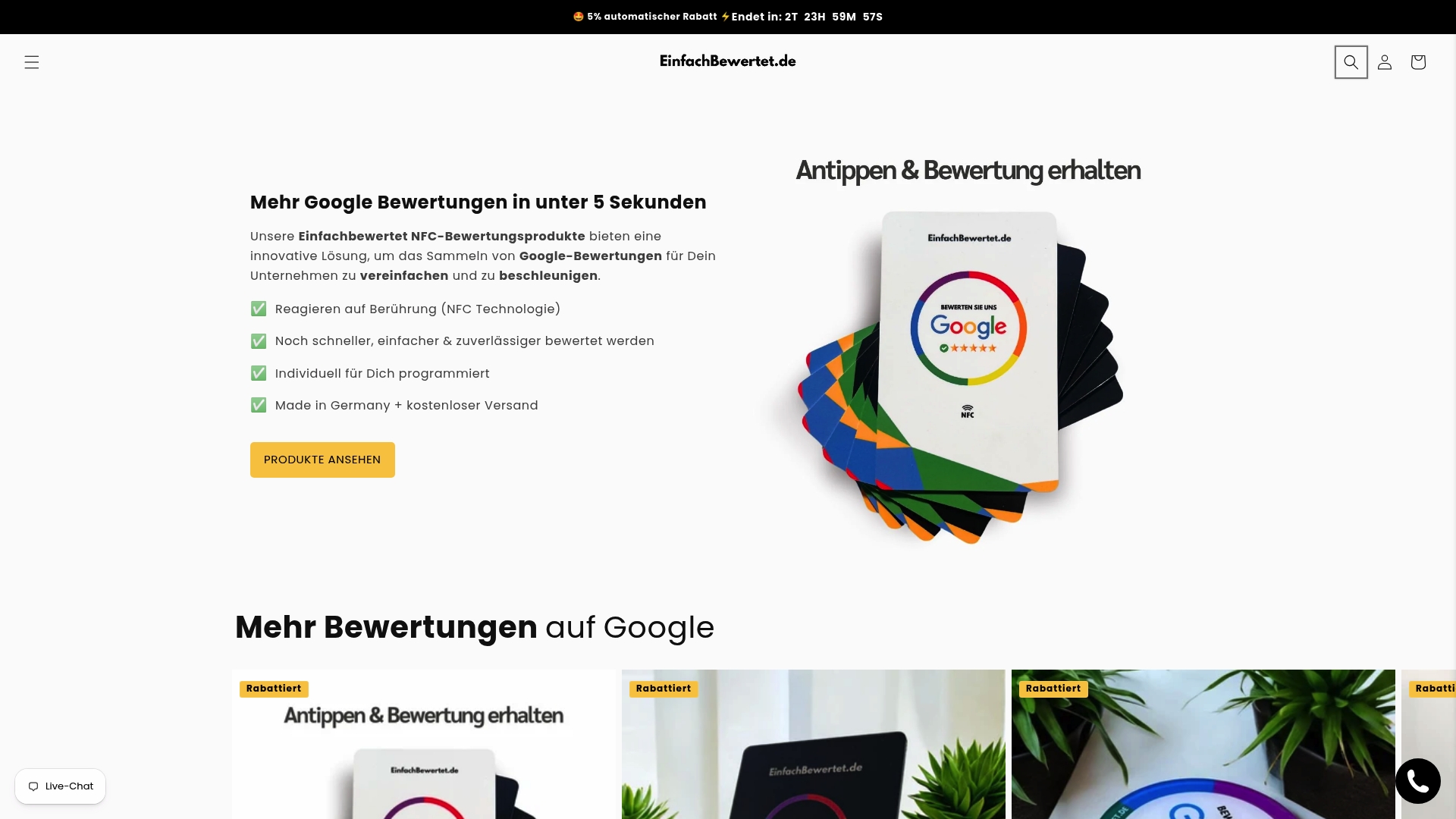
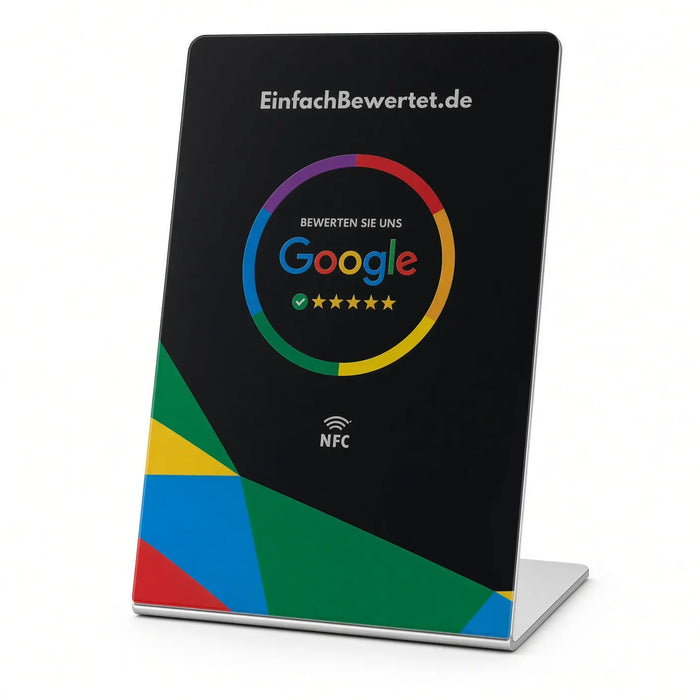
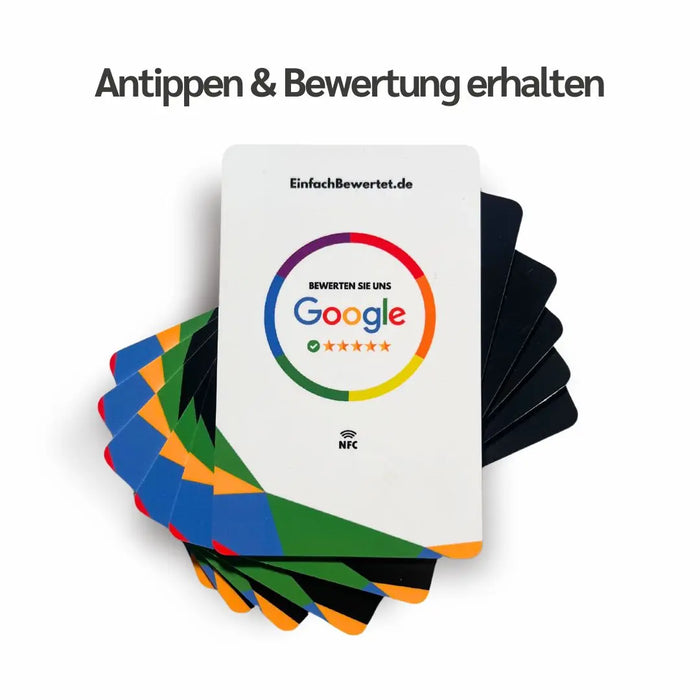
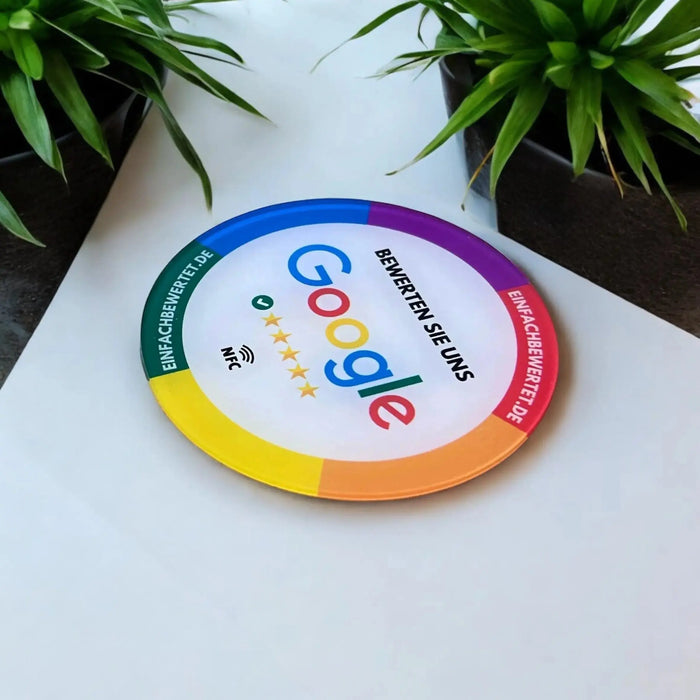
The product range covers the most common customer contact moments. For hospitality and retail, the Google review coaster with NFC is suitable, placed directly on the table. For reception counters and checkout areas, the Google review card with NFC is a good fit, individually programmed with the company’s logo and colour design. If you prefer working with visual contact, the Google business card with QR code is an alternative without an NFC chip.
All products are pre-programmed, there are no ongoing costs or subscriptions, and it is a one-time purchase. Simplify Reviews also offers a money-back guarantee and free shipping. If you want to take the next step: take a look at the product pages and choose the format that fits your customer contact point, whether table, counter or business card.
Sources
For deeper insights, the study on customer reviews and their revenue impact by Splendid Research is worth reading, as it quantifies the connection between reviews and purchase decisions. The XICTRON benchmarks for product reviews provide specific KPI targets for online retail. Ditella’s practical guide presents ten tested strategies specifically for trades businesses. In addition, ProvenExpert explains why the review rate in e-commerce is often underestimated.
- Study: Positive customer reviews dramatically increase revenue - SPLENDID RESEARCH
- Using product reviews correctly in your online shop 2026 | XICTRON®
- Ditella
- How Online Reviews Influence Sales — Spiegel / Medill (analysis)
FAQ
How do I get more customer reviews?
Ask actively right after a positive experience, ideally via WhatsApp or SMS, and reduce the path to leaving a review to a single click or tap, for example via NFC or a direct link.
How can I ask customers for reviews without seeming pushy?
Send the request separately from the invoice and keep the wording short and personal.
How can I get more Google reviews?
Use a link or NFC card that opens the Google review window directly, rather than just leading to your business profile. This significantly reduces drop-off compared with multi-step processes.
Which factors influence customer satisfaction and therefore the review?
The timing of the request, the simplicity of the review process, the channel chosen and the actual service quality all work together. A fast, public response to criticism also influences how future customers perceive the business.