30-Day Money-Back Guarantee: Legally Safe Wording for Review Products
A practical guide for providers of review products: templates, a checklist and the Simplify Reviews example to help make your money-back guarantee safer from legal warnings.

Yes, a money-back guarantee is allowed, but only under clear conditions. It must never be presented as a replacement for the statutory right of withdrawal and must offer the customer genuine added value. Anyone advertising with “money back” must meet three obligations immediately: provide a measurable additional benefit, make the conditions directly visible and clearly define how the reversal process works.
In short:
- A money-back guarantee should only be introduced if it offers measurable added value and is clearly distinguished from the statutory right of withdrawal.
- Advertisers must make specific information about the target group, deadline, scope of refund, exceptions and any quotas immediately visible in the guarantee advertising.
- For personalised NFC products, a transparent guarantee is especially important because customised goods can rarely be resold.
- Referring customers to the terms and conditions is not enough; instead, all guarantee conditions must be visible directly in the advertising copy to avoid misleading customers.
- Legal risks arise if guarantee promises merely repeat the statutory right of withdrawal or contain hidden restrictions.
Table of contents
- Money-back guarantee or right of withdrawal: what is the difference?
- How do you word advertising with a money-back guarantee in a legally safer way?
- How does the return and refund process work with a guarantee?
- Templates and checklist for your own guarantee
- How does Simplify Reviews handle guarantees and refunds?
- Why most guarantee copy fails to build trust
- Order NFC products with a money-back guarantee directly
- Sources
- FAQ
Money-back guarantee or right of withdrawal: what is the difference?
Many retailers confuse the two, and that is exactly where things can get expensive. The right of withdrawal under Section 312g of the German Civil Code (BGB) applies by law for 14 days from receipt of the goods, without any reason being required and without any additional promise from the seller. A money-back guarantee, by contrast, is a voluntary promise that goes beyond the statutory right of withdrawal and therefore needs different rules.
This is exactly where the trap lies: if you advertise a guarantee that, in substance, merely repeats the already existing right of withdrawal, you risk receiving a legal warning. German competition law, the German Unfair Competition Act (UWG), prohibits misleading commercial practices, and a guarantee without genuine added value is treated as just that. Section 3 UWG provides the legal basis for this, supplemented by numerous German Federal Court of Justice (BGH) decisions on sales promotion measures.
Consumer advice centres monitor this market closely. They can publicly identify misleading advertising and initiate legal warnings if guarantee promises mislead customers. Three points are especially important for providers of review products:
- The right of withdrawal always applies, regardless of whether an additional guarantee is advertised.
- A guarantee must offer an independent, measurable benefit, such as a longer period or additional refund conditions.
- Breaches of transparency obligations fall under the UWG and can be subject to legal warnings independently of the right of withdrawal.
If you ignore these three points, you are confusing marketing with legal risk and visibility. And in the end, that costs more than the guarantee ever brings in trust.
How do you word advertising with a money-back guarantee in a legally safer way?
The core rule is simple: anything that restricts the claim must appear where the guarantee is advertised, not only in the terms and conditions. Consumer protection organisations have repeatedly criticised this exact issue, because merely referring to the terms and conditions is not enough if the advertisement itself does not mention any restrictions.
Five details belong directly in the advertising copy, whether on a banner, in the product description or in a social media post:
- Who the guarantee applies to (all customers or only new customers)
- How long the period lasts (for example, 30 days from receipt)
- What exactly is refunded (purchase price, shipping costs or both)
- Which exceptions apply (such as customised goods)
- Whether there is a quota or quantity limit
Hidden restrictions such as “only for the first 100 orders” or “does not apply to personalised items” are particularly risky if they only appear in the small print of the terms and conditions. Journalistic investigations show numerous cases in which providers effectively hollowed out guarantees through quotas or unclear review processes without disclosing this in the advertising.
Pro tip: Make the added value specific and measurable, for example “30-day money back for unopened, unused goods” instead of a blanket “satisfaction guarantee” slogan. A vague statement is hard to defend legally; a specific one is much easier.
Problematic: “100% money-back guarantee, see terms and conditions for details.” Safer: for example, money back if the product is returned unused and in its original packaging, excluding individually programmed NFC items. The difference is not the tone, but the completeness.
How does the return and refund process work with a guarantee?
For statutory withdrawal, the deadline is clear: the retailer must refund the purchase price within 14 days of the withdrawal declaration, but may withhold payment until the goods have been received or proof of return shipment has been provided. For a voluntary money-back guarantee, this deadline does not apply automatically, but it should be defined just as clearly in your own conditions.
In practice, most providers require a receipt or a photo of the goods as proof. The following is important:
- Proof should contain only as much data as is necessary for the review, in line with data processing under GDPR principles.
- An internal deadline of around 14 days for checking and refunding creates reliability and protects against complaints.
- For customised products, such as pre-programmed NFC solutions, it should be clear in advance which return conditions apply, as these products can rarely be resold.
Fraud attempts can hardly be ruled out completely, but a clear documentation requirement (date, order number, condition of the goods) significantly reduces the risk.
Templates and checklist for your own guarantee
A short advertising text for a banner or product page could look like this: “30-day money back if you don’t like our product. Applies to all orders, excluding individually programmed items. Details on the return and refund process can be found here.” As a supporting short text on the product page: “Refunds are issued within 14 working days after the returned goods have been checked.”
Before setting a guarantee live, seven checkpoints help:
- Is the target group for the guarantee (all customers or new customers) stated directly in the advertising?
- Is the deadline stated specifically, rather than just “promptly” or “soon”?
- Are exceptions for customised goods clearly worded?
- Is the scope of the refund (purchase price, shipping) unambiguous?
- Is there internal documentation for every refund case?
- Has it been checked whether the guarantee offers genuine added value compared with the right of withdrawal?
- Are the withdrawal instructions and guarantee conditions separated in content, while both remain easy to find?
| Element | Right of withdrawal | Money-back guarantee |
|---|---|---|
| Legal basis | Section 312g BGB | Voluntary promise by the provider |
| Deadline | 14 days from receipt | Freely selectable, but must be clearly stated |
| Reason required | No | Depends on your own conditions |
| Exceptions possible | Hardly any (regulated by law) | Yes, but they must be transparent |
Withdrawal instructions and guarantee conditions should sit side by side, never as one and the same document. Otherwise, customers can quickly confuse which deadline and which conditions actually apply.
How does Simplify Reviews handle guarantees and refunds?
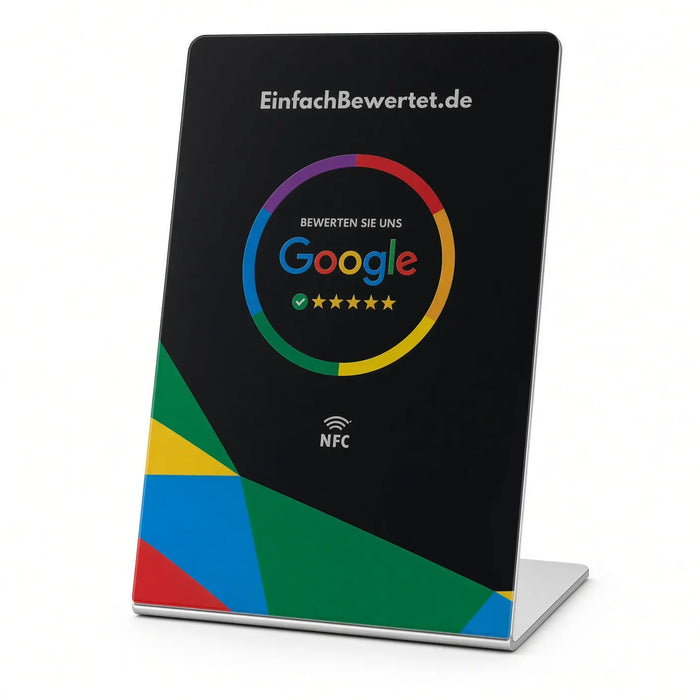
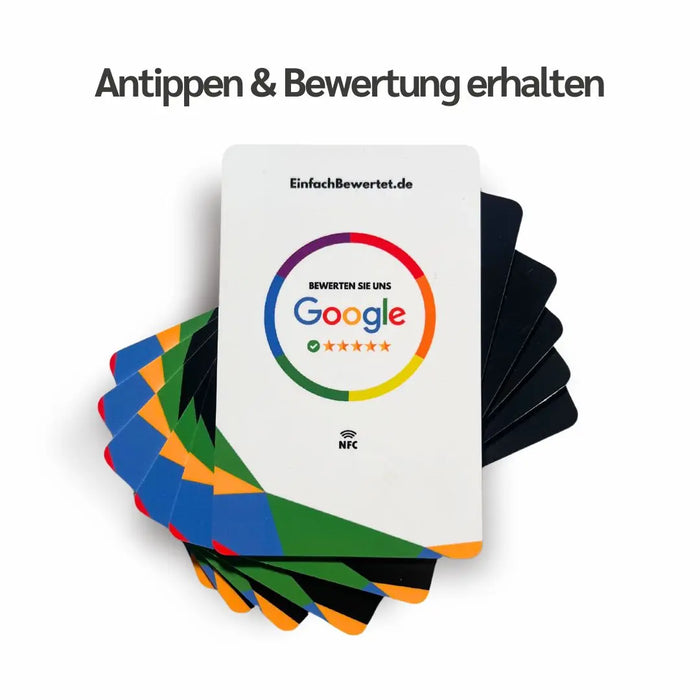
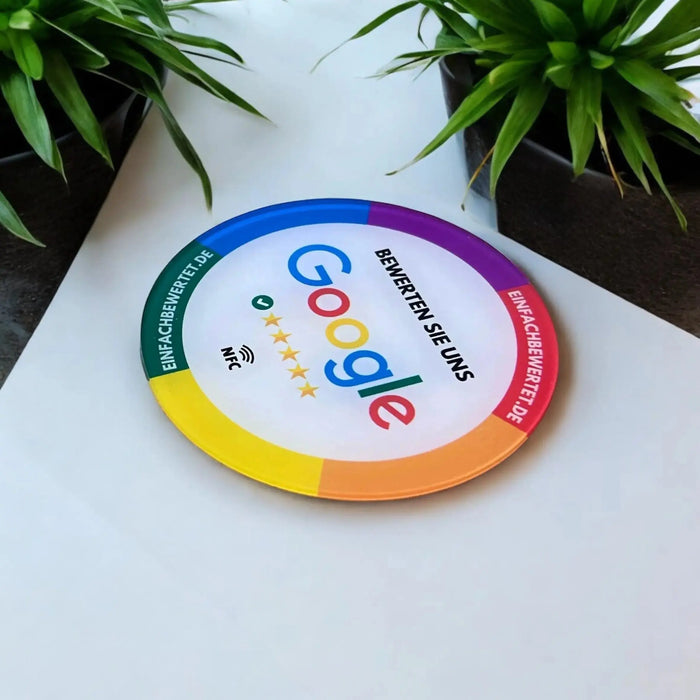
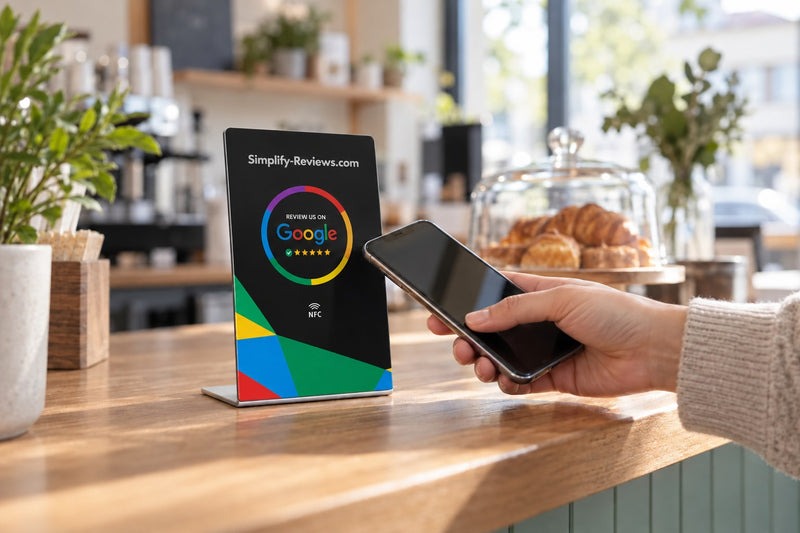
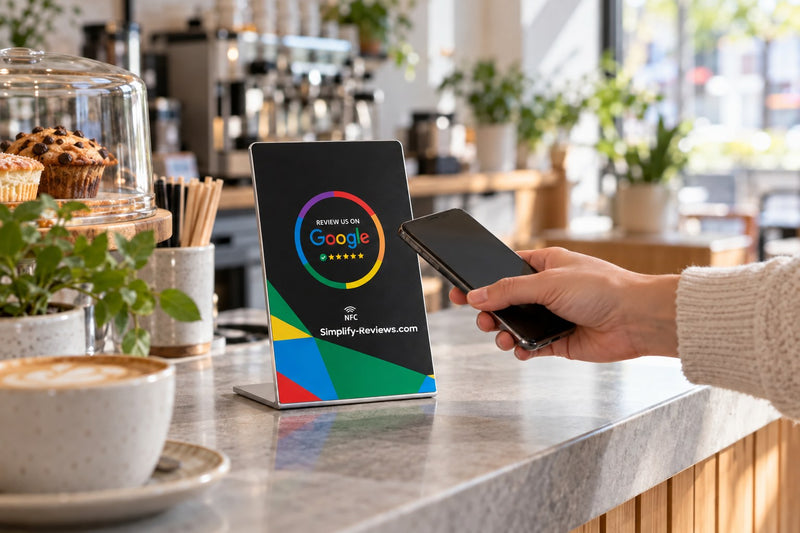
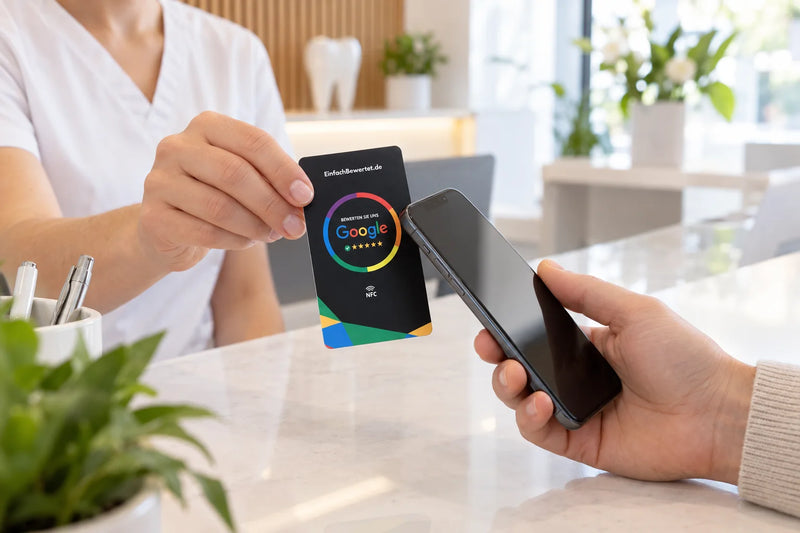
Simplify Reviews sells individually programmed NFC products such as review cards, displays and lids, each with its own logo and matching colour design for the relevant business. A clearly worded guarantee is particularly important for personalised items like these, because customised goods can rarely be resold.
The process at Simplify Reviews follows exactly the points listed above in the checklist:
- The guarantee conditions are visible directly on the product page, not hidden only in the terms and conditions.
- Refund requests are checked using order data before a refund is issued.
- Free shipping complements the guarantee as an additional, measurable benefit compared with the pure right of withdrawal.
This combination of a withdrawal form and a separate guarantee shows how the two instruments can be cleanly separated without confusing the customer.
Why most guarantee copy fails to build trust
Most criticism of money-back guarantees is not aimed at the idea itself, but at how it is implemented. Providers put “100% money back” on a banner and then link to a terms and conditions clause three screen pages long and full of exceptions. That is not a minor lapse; it is exactly the kind of misleading practice that consumer advice centres have been criticising for years.
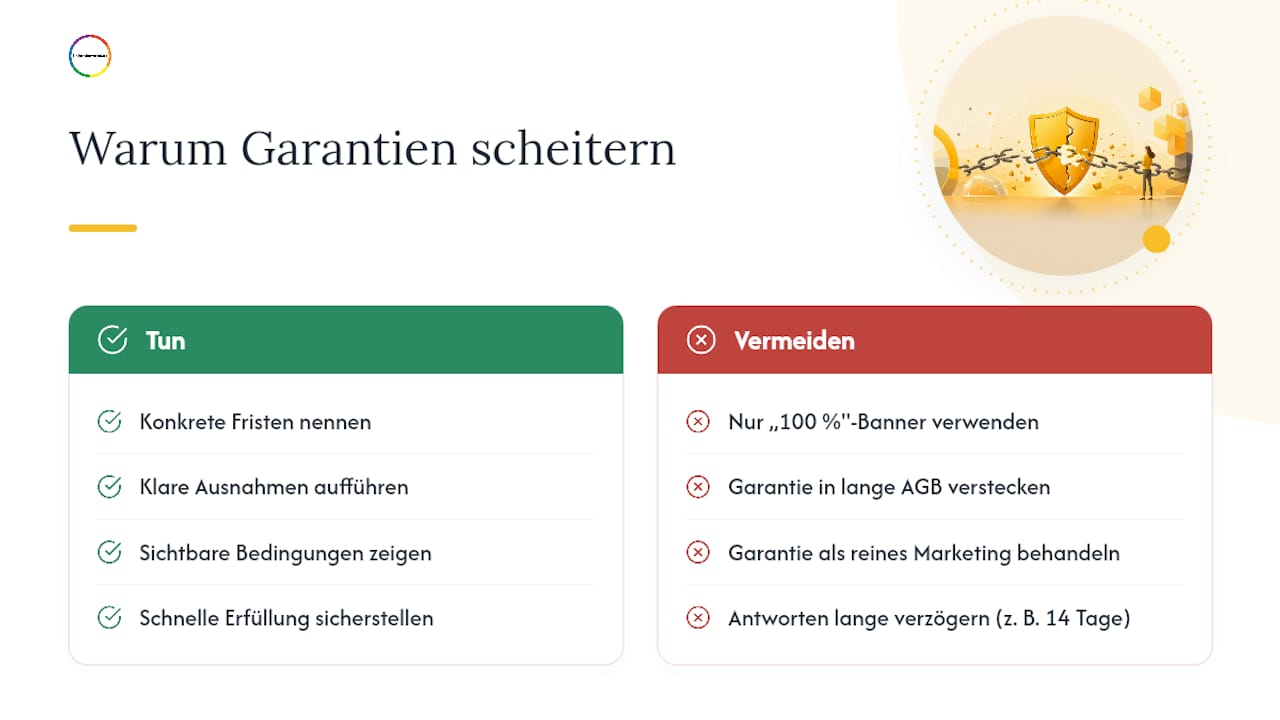
The common assumption that a guarantee automatically makes the product more credible is too simplistic. A guarantee only becomes credible through what it specifically promises and through the speed with which it is honoured. A customer who waits 14 days for a response, even though the advertising suggested “immediate” action, loses exactly the trust that the guarantee was supposed to build.
If you sell review products, you should therefore treat the guarantee not as a marketing tool, but as a promise that must be backed up. Specific deadlines, clear exceptions, visible conditions. That is less exciting than a big “100%” banner, but it holds up legally and practically.
— Dario
Order NFC products with a money-back guarantee directly
Simplify Reviews offers NFC review lids, cards and displays, all pre-programmed for the relevant business and finished with individual branding. If you are hesitating because you do not know whether the investment is worthwhile, the clearly worded return guarantee offers a real difference compared with many other providers in the industry, where guarantee conditions only appear after purchase.
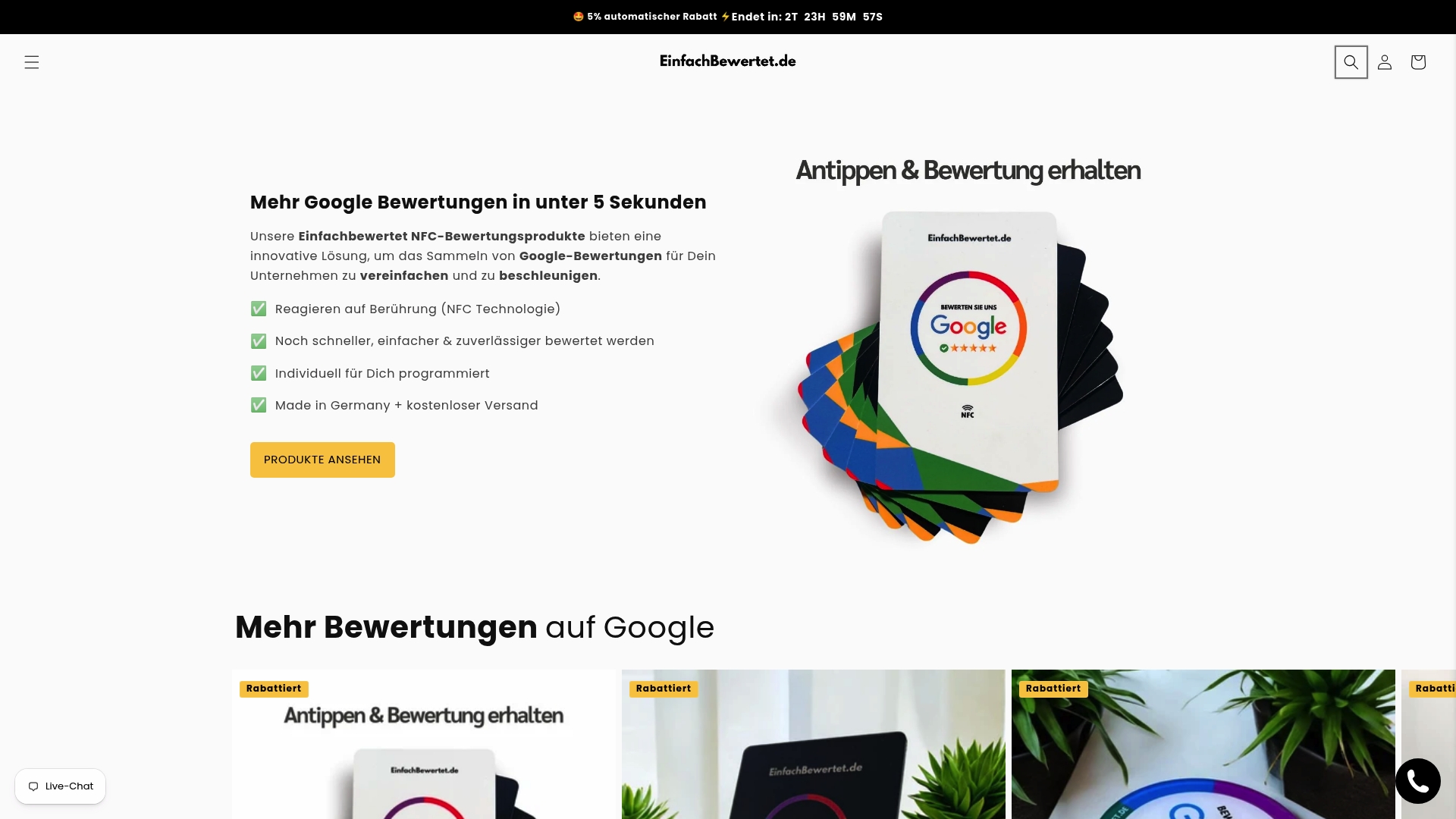
The Google review lid (NFC) is suitable for restaurants, cafés and hotels, the review display for reception desks and shop counters, and the review card for businesses with multiple locations. If you want to get rid of an existing negative review, you can also get support through the free removal assistance from Simplify Reviews. If you are looking for the right solution for your business, you can open a product page directly and start your order; the guarantee conditions are shown there right next to the product description.
Sources
To make your own guarantee wording legally safer, it is worth looking at the original sources, not only secondary articles:
- Advertising: money-back guarantee – legal warning
- Misleading “money-back” guarantees
- Free trial or money-back guarantee: how consumers are misled
Your own guarantee terms and conditions should be legally reviewed before publication, especially because case law on sales promotion measures continues to develop.
FAQ
Can you claim your money back under a guarantee?
Yes, provided the guarantee conditions are met, such as the deadline and the condition of the goods. The statutory right of withdrawal exists independently of this and always applies for 14 days from receipt of the goods.
How does a money-back guarantee work in practice?
The customer usually submits proof of purchase, after which the provider checks the return and refunds the purchase price within the promised period. At Simplify Reviews, these conditions are shown directly on the relevant product page.
What does a 100% money-back guarantee mean?
It promises a full refund of the purchase price, often if the customer is dissatisfied with the product. However, without clearly stated conditions on deadlines, exceptions and proof, this wording carries a risk of legal warnings, as legal analyses show.
What is the difference between the right of withdrawal and a money-back guarantee?
The right of withdrawal is required by law and applies for 14 days without the need to give a reason. A money-back guarantee is a voluntary additional service offered by the provider and must provide independent added value; otherwise, it is considered misleading.