7 Steps to More Google Reviews in Your Beauty Salon, with Pilot Plan
A 7-step checklist for beauty salons: run a pilot with 50 cards, NTAG213, compliant wording and key metrics to generate more Google reviews.
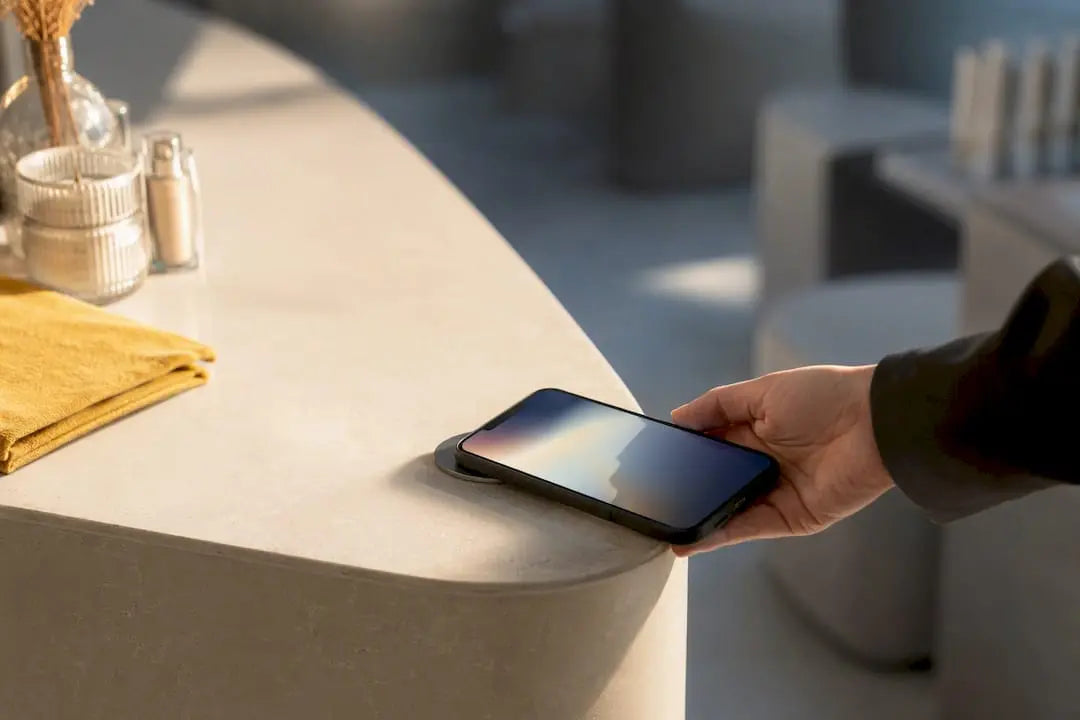
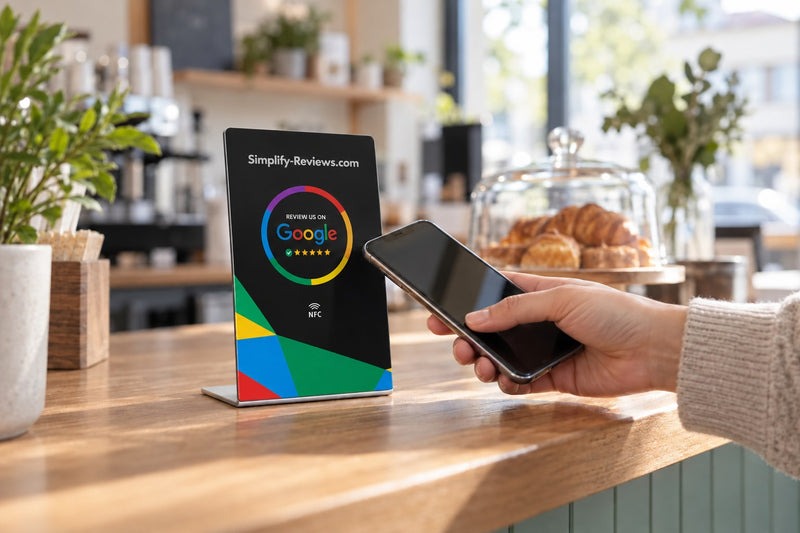
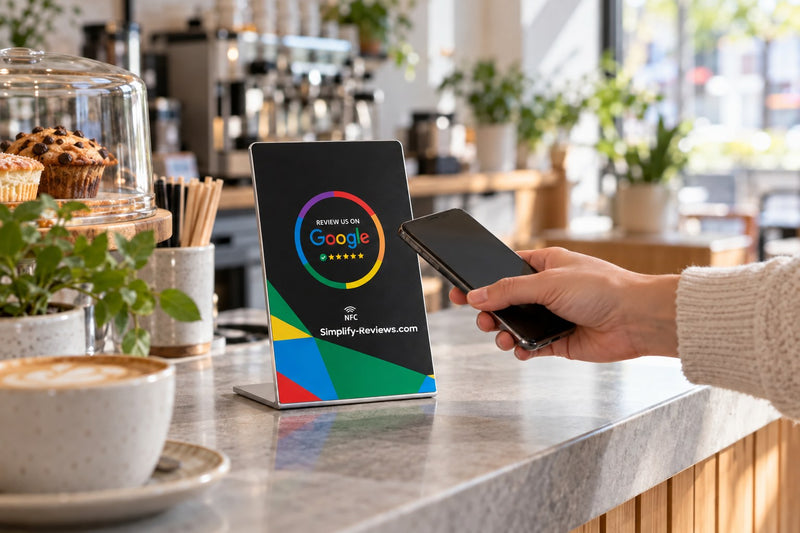
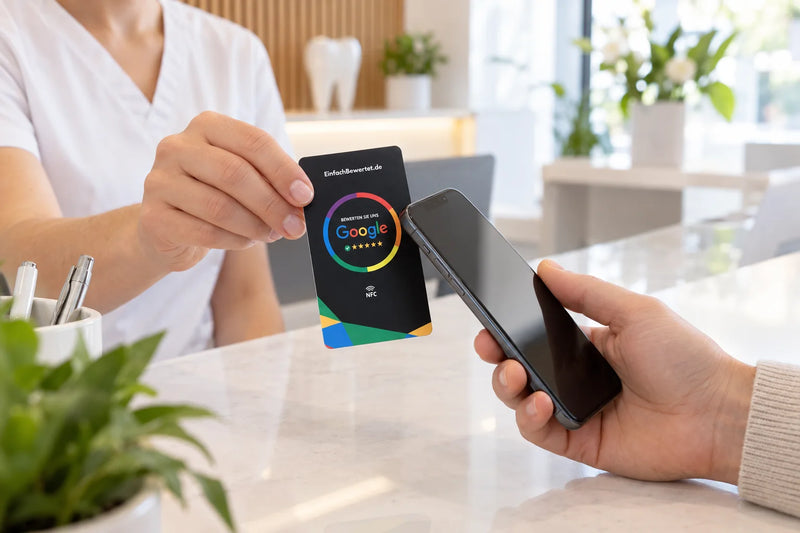
The fastest way to get more Google reviews in a salon is an NFC review card programme with a QR fallback. Customers tap their smartphone on a card or display stand, land directly in the review window and write their feedback while the result is still fresh in front of them. A noticeable increase in reviews usually appears within a few months. The first step: a small pilot order of cards, tested on several different devices.
In short:
- Using NFC and QR code cards can significantly increase the number of reviews in your salon within a few months when implemented properly.
- The NTAG213 chip is sufficient for most salons, as it offers a stable 50,000 scan cycles and reliably reads a simple URL.
- Placement chair-side, directly after the mirror reveal, delivers the highest conversion rate, followed by the checkout area and waiting area.
- For the rollout, start with a pilot order of around 50 cards to spot issues early before printing larger quantities.
- Review programmes must be based only on a neutral request, with no rewards or employee quotas, to avoid violating Google’s guidelines.
Table of contents
- Beauty salon Google reviews: 7-step checklist
- Which NFC chip and design work best?
- Where should the cards be placed in the salon?
- What should you consider regarding Google’s guidelines?
- How does the pilot and rollout test work?
- Which metrics show whether the programme is working?
- What do salons overlook when building their review programme?
- Simplify Reviews: test package for your review programme
- FAQ
Beauty salon Google reviews: 7-step checklist
Before cards go into full production, the programme needs a fixed sequence that has proved effective in avoiding reorders and frustration among staff.
- Find the Place ID and use it to generate the correct writereview URL for the salon.
- Place a pilot order of around 50 cards and create a device testing matrix.
- Combine NFC and QR code; never rely on just one channel.
- Make the QR code visible on the print design rather than hiding it as an afterthought.
- For chains with multiple locations, plan a stable redirect option instead of a fixed target URL.
- Create a neutral sentence for staff that works without gating.
- Only lock the chips after the pilot has been confirmed, and set up KPIs and regular reporting.
This sequence follows a proven setup workflow that can be completed per location in less than 30 minutes. If you reverse the order and lock first, you risk permanently encoding an error in the URL.
Which NFC chip and design work best?
Your choice of chip is about reliability, not prestige. NTAG213 is the right standard for most salons. It offers around 144 bytes of storage and approximately 50,000 scan cycles, which is more than enough for a simple Google writereview URL, as comparison data on salon cards shows. NTAG215 or NTAG216 are only worthwhile if you also need to store larger amounts of data or several actions on one chip, such as a social media link plus a review link in a chain.
For the NDEF format, keep it simple: a plain https URL, no redirects with unnecessary parameters, otherwise the URL becomes too long and some phones take longer to open it. For material and layout, a clear structure helps:
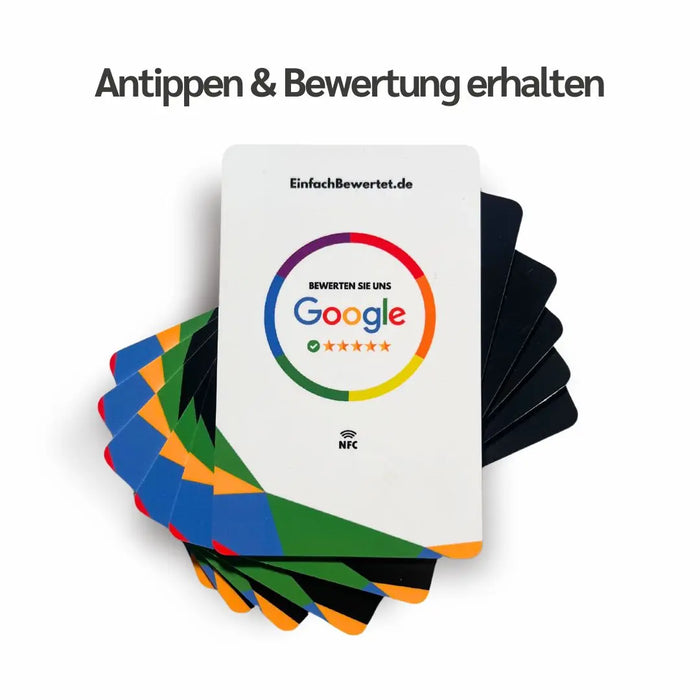
- Standard-format PVC cards are more than enough for most salons.
- Premium materials such as metal or wood veneer are worthwhile if the card also serves as a branded object at reception.
- A QR code belongs on every card as a fallback for older Android devices.
- The tap area itself needs space, with no stickers or logos placed directly over the chip.
Pro tip: Only lock the chip to a short redirect URL, never directly to the final writereview address. Locking is irreversible, and if Google changes the link format later, you could be left with worthless cards.
Where should the cards be placed in the salon?
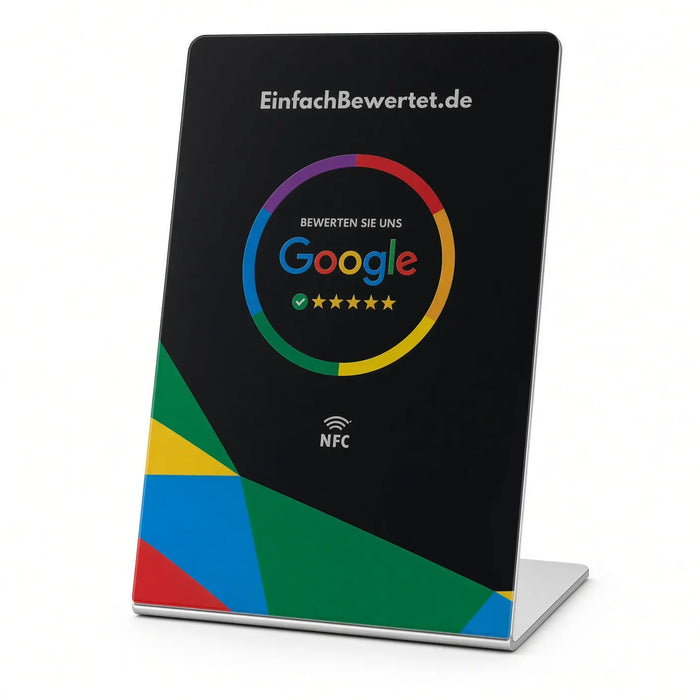
Placement has a bigger impact on success than the technology itself. Field studies in salons and spas show that handing over the card directly after blow-drying or styling — the chair-side moment in front of the mirror — achieves conversion rates of 12 to 25 percent, while reception-only or checkout placements reach only 5 to 12 percent, according to practical data on salon review cards. The moment when a client sees their result in the mirror is the strongest emotional point of the entire visit.
Useful locations for a beauty salon Google reviews programme include:
- Chair-side, directly after the mirror reveal, where it has the strongest impact.
- The checkout area as a second chance, for clients who did not have time earlier.
- Table displays in the waiting area, as a passive reminder without pressure.
- An insert in the bag with product purchases, for the moment at home.
A sample script for stylists could be: “If you’re happy with the result, we’d really appreciate a quick review — here’s the card for it.” No pressure, no second request in the same appointment. If you have several employees, it is worth using a separate UTM parameter per stylist on the target URL, so you can later see who generates the most reviews and whose card may be poorly placed.
What should you consider regarding Google’s guidelines?
Review gating means filtering customers by satisfaction before they leave a review and only sending satisfied customers to the review page. That is exactly what violates the guidelines, as do rewards for submitted reviews or fixed quotas per employee. Policy notes on NFC review cards are clear here: a neutral request is allowed; any form of steering the outcome is prohibited.
- Never ask about satisfaction before offering the card.
- No discounts, vouchers or tip bonuses for a review.
- No employee quotas such as “five reviews per week”, as this encourages pressure on customers.
- If you are unsure about the target page, use a redirect layer and contact support if in doubt.
Important: Neutral wording such as “We’d appreciate your honest feedback” helps protect you both from warning letters and from reviews being deleted by Google itself if a pattern of gating is detected.
How does the pilot and rollout test work?
A pilot size of 50 cards per location catches most production errors before expensive reprinting becomes necessary. Test on several iPhone and Android models, with and without a case, because some cases block the antenna.
| Test criterion | Test method | Approval criterion |
|---|---|---|
| URL accuracy | Tap on 5 devices, manually check the URL | Leads exactly to the correct writereview page |
| Device coverage | iPhone and Android, each with and without a case | Scan works with all combinations |
| QR fallback | Scan with the standard camera app | Opens the same target URL as NFC |
| Material test | Test chip under varnish and near metal | No signal loss during normal handling |
Only once all four criteria have been passed should you place the volume order. Typical sources of error include an incorrect Place ID, faulty tags from a poor production batch, or metallic surfaces that weaken the signal. For individual salons, direct encoding to the final URL is sufficient. For chains with multiple branches, a redirect pattern via your own domain makes more sense because the target page can be changed later without having to print new cards.
Which metrics show whether the programme is working?
Four numbers are enough for solid reporting: scan rate, conversion from scan to actual review, the number of new reviews per month and the average star rating over time. With these metrics, you can track how your salon’s review velocity develops after introducing the cards.
- Set up UTM parameters per stylist to keep attribution clean.
- Use weekly rather than monthly reporting in the first test phase.
- Test chair-side placement against checkout placement and compare the conversion.
- Run script variations against each other, for example with and without a follow-up reminder.
Responding regularly to incoming reviews strengthens the effect even further. Knowing how to respond properly to Google reviews often determines whether a one-off review turns into lasting customer loyalty.
What do salons overlook when building their review programme?
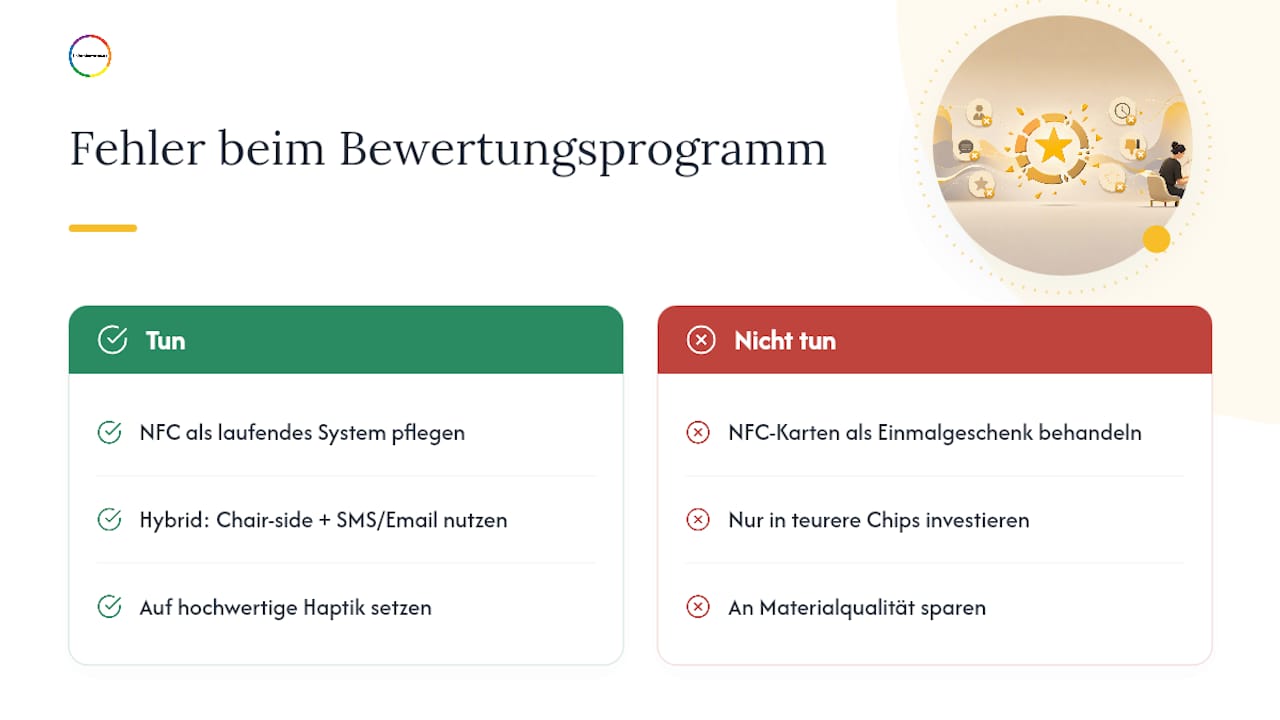
Most salons treat NFC cards like a one-off promotional giveaway instead of a system that needs ongoing maintenance. That is the real mistake. A card that works well in the first month loses its effect as soon as staff change or the script is forgotten. Hybrid programmes that combine chair-side moments with a later reminder by SMS or email deliver the most stable long-term results, according to observations from the salon sector, because they reach both spontaneous and follow-up customers.
A second blind spot: salons often invest in more expensive chips instead of better feel and finish. A chip with double the storage capacity achieves nothing if the card feels cheap and disappears into a drawer. A higher-quality surface has been shown to increase willingness to tap, because it feels like a deliberately designed branded object rather than an advertising flyer. Cutting corners here means saving in the wrong place.
— Dario
Simplify Reviews: test package for your review programme
There are practical alternatives to DIY with generic NFC blanks: individually programmed cards, lids and stickers, finished with your logo and colour scheme, instead of spending hours on URL encoding and test chips.
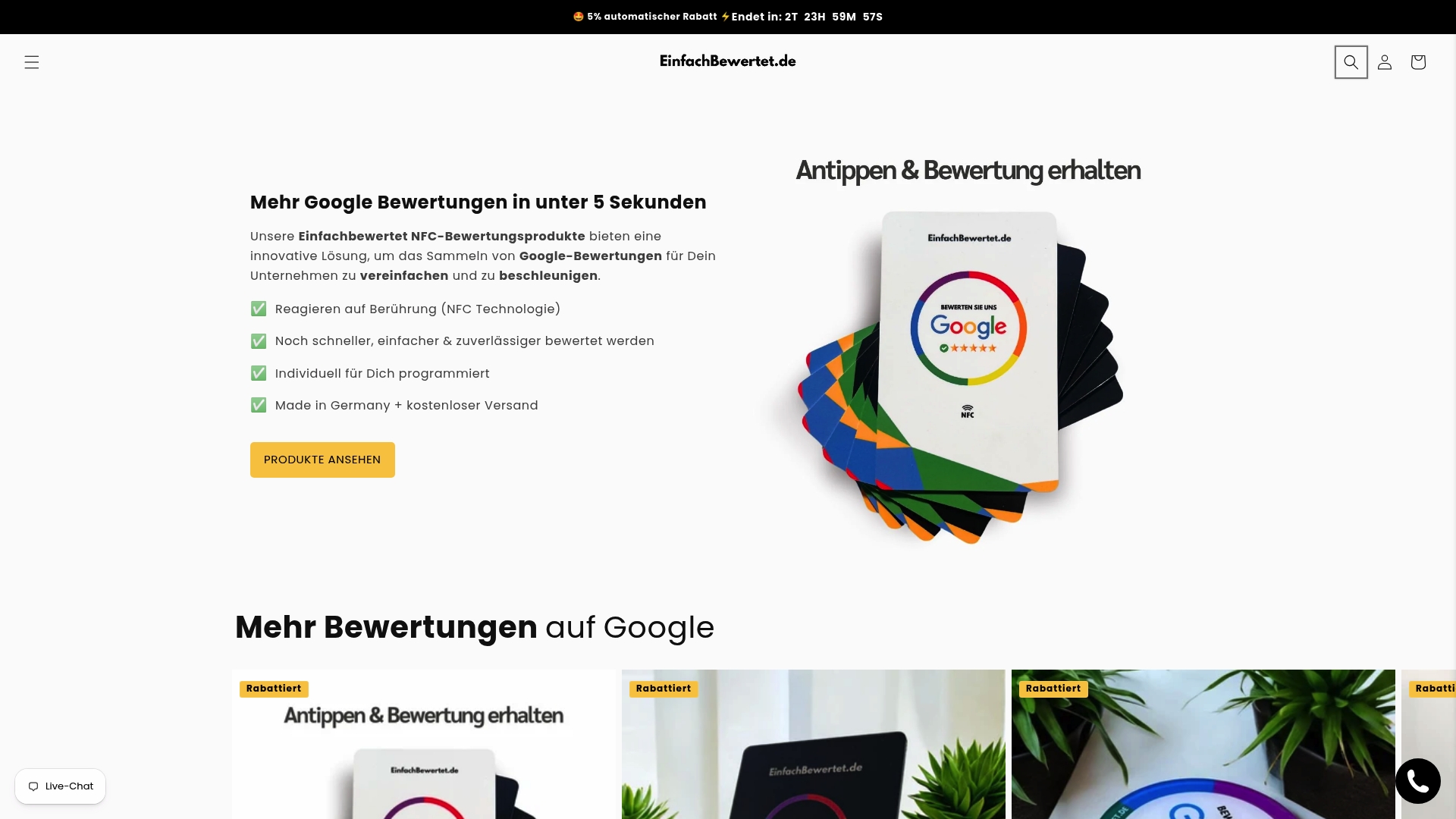
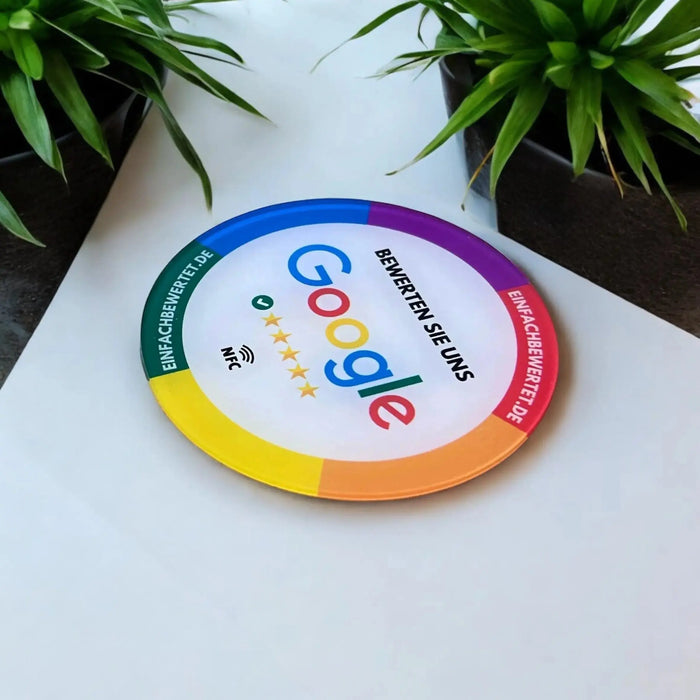
The range includes review lids with NFC chips that can be placed on drinks, packaging or directly at the reception counter, as well as classic cards for the chair-side moment. Some products offer a money-back guarantee and free shipping, which can reduce the risk of a mistaken order. For salons that also want to sharpen their Google Business Profile, it is worth taking a look at Business Profile optimisation. If you also want to build your social media reach, the Instagram NFC card is a suitable add-on product for the reception area. The simplest first step: place a pilot order with custom branding and test the cards on several devices as described in the test plan before equipping the entire branch.
FAQ
How do I create the right Google review link?
You can use the salon’s Place ID to generate a direct writereview URL that takes customers straight to the review window. Step-by-step instructions are available in the guide to Google review links.
Does every card also need a QR code?
Yes. NFC does not work equally reliably on all devices, so the QR code acts as a fallback, especially for older Android phones.
How many cards should a pilot include?
Around 50 cards per location are enough to identify production errors, faulty chips and device issues before placing a larger order.
Is it allowed to reward customers for leaving a review?
No. Rewards and review gating violate Google’s guidelines. The only permitted approach is a neutral request for honest feedback.
Which NFC chip is best for salons?
NTAG213 is more than sufficient for a simple Google writereview URL and is a commonly used standard for individually programmed cards.